

A pipeline welding system that lays perfect caps on the test bench is worth nothing on the day the project needs it in the next valley. In multi-spread pipeline programs, the fleet does not stay on one right-of-way: spreads advance, sections close out, tie-in campaigns begin elsewhere. The fleet that cannot be moved quickly, cheaply and completely becomes the schedule. This guide turns mobilization and logistics into an engineering discipline for the four machine classes of the DENVO / ENGINE WELDER pipeline automatic welding line: the single-torch external welder (DW-EW-I), the dual-torch external welder (DW-EW-II), the battery-powered internal welding machine (DW-EH48/56), the flexible internal welding machine (DW48/56-8H-D), and the automatic TIG orbital welding machine.
Why Mobilization Is a Schedule Discipline, Not a Trucking Task
On a multi-spread project the welding fleet changes location several times per season. Every transfer carries three cost lines: transport itself, the idle days between the last weld on spread A and the first production weld on spread B, and the risk that something fails at first arc because a step was skipped. Treat each move as a mini-commissioning: with a load map, a timeline, defined gates and a first-weld verification. The machines below were built to make this cheap: light carts, split tracks, self-powered drives and compact bodies all exist to shrink the mobilization bill.
Load Map: What Each Machine Class Actually Weighs
The fleet load map drives every downstream decision: truck type, crane capacity, escort requirements, and how many machines fit one convoy. Public specification data of the pipeline automatic welding series:
| Machine | Model | Weight / size | Power | Logistics-relevant traits |
|---|---|---|---|---|
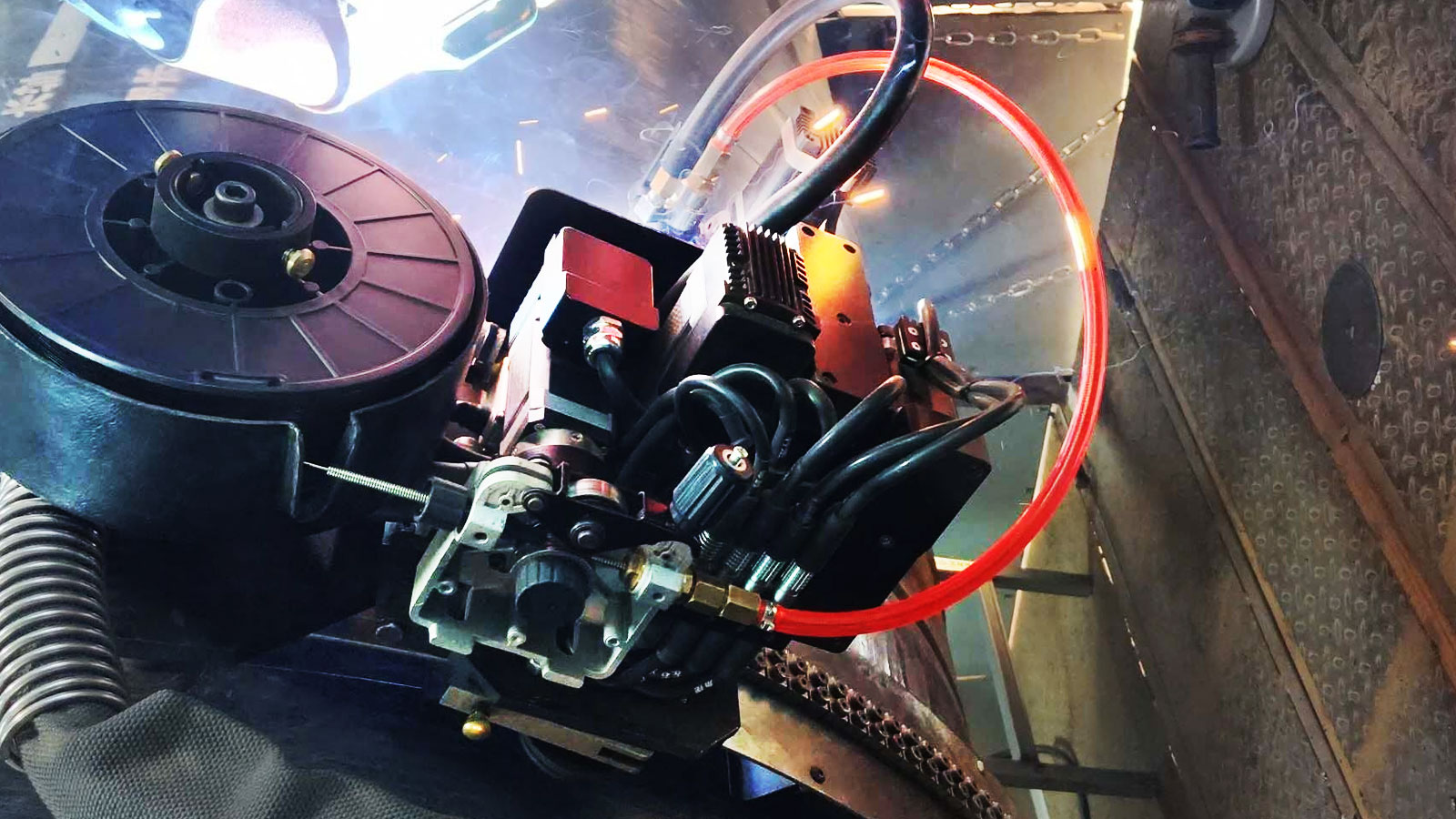
| Single-torch external welder | DW-EW-I | Lightweight welding cart + split ring track | External power source | Split track segments; cart is small and dust-protected; Φ219–Φ1422mm via track sets |
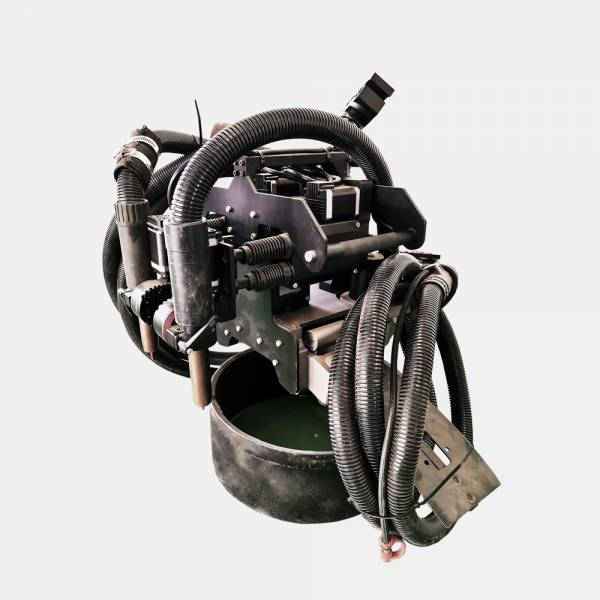
| Dual-torch external welder | DW-EW-II | Dual-torch carriage + track | External power source | Shares track system with single torch; consumables common; multi-channel data instead of paperwork |
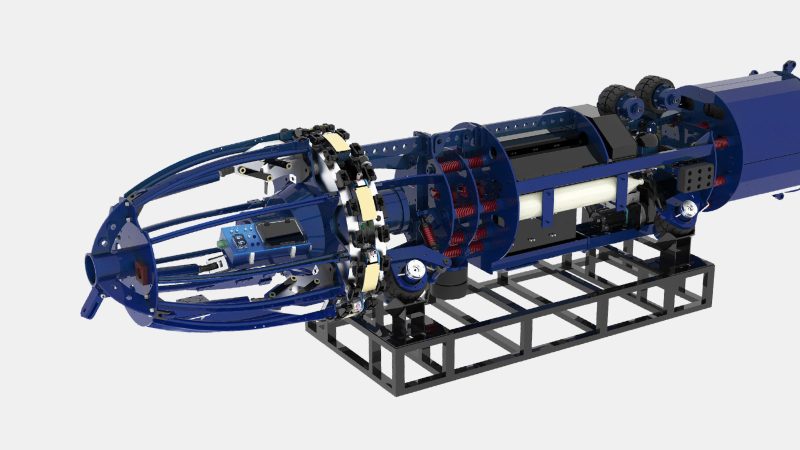
| Battery internal welder | DW-EH48/56 | 2950kg, 5200×1200×1100mm | Lithium battery + hydraulic | Self-powered: no generator or cable drums; travels inside the pipe bore; wireless remote |
| Flexible internal welder | DW48/56-8H-D | 2400kg, 4600×1250×1200mm | 230AH×3 battery, DC24V, servo-electric | Compact body, passes 5/6D bends and ≤30° grades; can move along the right-of-way itself |
| Automatic TIG welder | Orbital TIG system | Per system configuration | Per WPS | No separate public data sheet; specify per welding procedure specification |
Fleet Allocation Across Multiple Spreads
Before any truck rolls, decide which machines go where. The allocation rule that works in practice: match the machine class to the spread profile, then pool the heavy long-lead items.
| Spread type | Recommended mix | Mobilization rationale |
|---|---|---|
| Open-mainline production spread | 1 internal welder (root) + 2–3 external welders (fill/cap) | Internal machine sets the root pace; external fleet sized to fill/cap takt; move external carts and tracks, keep the internal machine on the front spread |
| Mountain or off-grid spread | Flexible or battery internal welder + single-torch carts | Self-powered machines remove generator and cable logistics; compact internal body passes grades and bends without road upgrades |
| Tie-in and station campaign | Single-torch external welder + automatic TIG | Short moves between locations; light carts and orbital units redeploy daily, no heavy haul needed |
| Prefabrication shop | Dual-torch external welder on fixed stations | No field mobilization at all; the shop concentrates the high-productivity machine and absorbs spread overflow |
| Emergency repair standby | Single-torch cart + spare track sets, pre-packed | Ready-to-roll kit: the machine that deploys in hours is the one packed before the call |
Single-Torch External Welder: the Modular Traveler
The track is the logistics unit
The DW-EW-I rides on a perforated steel track with a single-gear rack drive, and the ring track is split into segments. That split design is a logistics feature: segments are handled by two workers, stacked in a standard truck, and sized per diameter. For a multi-diameter project, mobilize the cart once and swap track sets per diameter — Φ219–Φ1422mm coverage means the same cart serves mainline, station piping and tie-ins.
Mobilization checklist per move
- Inventory track segments and bolts against the diameter list of the next spread
- Inspect rack teeth and cart wheels; replace worn pinions before travel, not after first arc
- Pack the touchscreen pendant and cable separately with shock protection
- Verify parameter sets for the new diameters are exported, backed up and loaded
- Book crane and forklift at the receiving spread for the arrival window
Dual-Torch External Welder: Move the Machine, Send the Parameters by File
One track inventory for the whole fleet
The dual-torch DW-EW-II uses the same track family as the single-torch machine, and consumables are standardized across both. For fleet logistics this is decisive: one spare-part inventory, one track-set pool, one training baseline. A spread does not need to own its tracks — the pool follows demand.
Process data travels faster than trucks
The DW-EW-II stores process parameters in multiple channels with import, export, upload and download through its digital interface. When the fleet moves, the welding brain moves as a file: validated parameter sets for the new pipe diameter, wall thickness and steel grade are exported at the old spread and imported at the new one the same evening. First-arc risk drops because the machine does not start from a blank procedure.
Dual-torch mode doubles the payload per pass
Because two torches run the same circumference, a dual-torch machine replaces two single-torch stations in production terms. In mobilization arithmetic that means one truck move instead of two — halving transport cost per weld-station moved, provided the receiving spread has the power supply and crane capacity for the heavier carriage.
Battery Internal Welder: the Machine That Removes Its Own Logistics
Self-powered means fewer convoy items
The DW-EH48/56 runs on a lithium battery group with electric plus hydraulic drive. Look at what disappears from the mobilization list: no generator set, no high-current cable drums, no grid connection permits, no fuel logistics for the welder itself. On remote spreads the machine arrives, enters the pipe bore, and welds — the wireless remote keeps operators out of the danger zone during moves.
It travels inside the pipeline
At 2950kg and 5200×1200×1100mm, the battery internal welder is a heavy load but a simple one: a low-bed truck handles it, and once on the right-of-way it travels through the pipe bore itself — climbing ≤30° grades and passing 5D horizontal 90°, vertical 30° bends. The last kilometers of mobilization do not need roads at all, which is exactly why it suits mountain and no-grid spreads rated for altitude up to 4000m, −40 to 65°C and ≤90% humidity.
Battery logistics replaces fuel logistics
The mobilization question for a lithium machine is charging, not fueling: confirm charging power at the receiving camp, plan charge windows around the welding takt, and transport the wireless remote units and spare consumables in the same crate as the machine so nothing separates in transit.

Flexible Internal Welder: the Compact Machine Built for Hard Access
2400kg that goes where trucks should not
The DW48/56-8H-D trims the body to 2400kg and 4600×1250×1200mm, with a large-torque servo-electric drive, hydraulic expansion centering and a fast-response electromagnetic brake. In mobilization terms the compact body is the point: it passes 5/6D bends and ≤30° grades, so on mountain spreads the machine moves along the line by itself instead of forcing the construction of access tracks. Pairing and root welding complete in roughly five minutes per joint, which is what keeps a relocated spread productive from day one.
Specification snapshot for the transport plan
| Parameter | DW48/56-8H-D (flexible) | DW-EH48/56 (battery) |
|---|---|---|
| Pipe diameter | Φ1219–Φ1422mm | Φ1219–Φ1422mm |
| Welding units | 8 | 8 |
| Single-pass weld time | ≤120s | ≤90s |
| Travel speed | 0–60m/min | 0–40m/min |
| Weight | 2400kg | 2950kg |
| Battery / power | 230AH×3 groups, DC24V | Lithium battery, electric + hydraulic |
| Temperature range | −50 to 65°C | −40 to 65°C |
| Altitude | 0–3500m | ≤4000m |
| Wire diameter | Φ0.9–1.2mm | — |
Automatic TIG Welder: the Lightest Piece of the Fleet
The automatic TIG orbital welding machine has no separate public data sheet on the product line; its role in fleet logistics is defined by its function rather than numbers. It is the light, precision-class member of the fleet: ideal for root passes on small diameters, stainless sections and shop work, deployed per the welding procedure specification. Mobilization is simple — control case, wire and gas supply, orbital carriage — but the gas supply discipline travels with it, so plan shielding gas procurement for the new spread in the same shipment window.
The Mobilization Timeline: T-14 to First Arc
| Phase | Window | Actions and gate |
|---|---|---|
| T-14 to T-10 | Plan | Confirm spread profile, diameter list and machine allocation; freeze the load map; order transport and crane slots |
| T-9 to T-5 | Prepare | Service and inspect every machine; export and back up parameter sets; pack consumables and spares against the standard kit list |
| T-4 to T-1 | Ship | Load per the load map; photograph packing condition; confirm permits for oversized items; convoy departs |
| T0 | Arrive | Unload by crane plan; unpack and inspect against photographs; report damage before power-up |
| T+1 | Verify | Install tracks, connect power, import parameter sets, dry-run all axes and remotes |
| T+2 to T+3 | First arc | Test joints on project pipe per WPS; inspect; sign off the mobilization file; production welding begins |
Site Readiness Gates Before the Convoy Departs
- Receiving spread confirms access road class, bridge limits and unloading area for the heaviest machine (2950kg)
- Crane or forklift capacity and a certified operator booked for the arrival window
- Power supply and, for lithium machines, charging capacity confirmed at the camp
- Shielding gas supply contracted for external welders and automatic TIG
- Parameter sets for new diameters and wall thicknesses exported and tested in the shop before shipping
- Spare-part kit and consumables packed to the standard list; nothing borrowed from the departing spread
- Wireless remotes, pendants and cables crated with their machines
- WPS/PQR packages and inspection documents copied into the mobilization file
- Insurance and transport liability assigned in the contract for cross-border moves
Cross-Border and Long-Distance Deliveries
For international pipeline programs the fleet sometimes crosses borders between spreads or projects. Keep the discipline generic and contractual: confirm customs classification and documentation responsibilities in the supply or rental contract, pack machines in export-grade crates with moisture protection for the climate envelope they will serve (the internal welders are specified from −50°C), and ship the first consumables and spares with the machines rather than in a later container. A machine that arrives before its spares is not commissioned — it is stored.
Ten-Item Fleet Mobilization Checklist
- Load map finalized per machine class with weights and dimensions
- Allocation plan matches machine class to spread profile
- All machines serviced and inspected within the last 30 days
- Parameter sets exported, backed up and verified for the new diameters
- Track sets and consumables inventoried against the next spread diameter list
- Transport, crane and unloading slots confirmed in writing
- Charging / power / gas supply confirmed at the receiving spread
- Spare-part kits and remotes crated with their machines
- Arrival inspection and first-arc verification gates scheduled
- Mobilization file with photographs and sign-offs opened for the move
Frequently Asked Questions
How long should a spread-to-spread move of an external welder take?
With the timeline above, a single-torch or dual-torch external welder typically welds its first test joint two to three days after arrival: one day to unload, inspect and install tracks, one day to import parameters and dry-run, then verification welds. The variable is rarely the machine — it is whether the receiving spread booked the crane, power and gas before departure.
Can the internal welding machine move itself along the right-of-way?
Yes, within the pipe bore. Both internal welders travel inside the completed pipeline on their own drives — the flexible DW48/56-8H-D passes 5/6D bends and ≤30° grades with its compact 2400kg body, and the battery DW-EH48/56 climbs ≤30° and passes 5D horizontal 90°, vertical 30° bends. Road transport is only needed between spreads, not along the line.
What is the cheapest way to run a multi-diameter project with one fleet?
Keep the welding carts and carriages in the pool and multiply track sets, not machines. The single- and dual-torch welders share the same track family and standardized consumables across Φ219–Φ1422mm, so adding a diameter is a track-set decision, not a fleet decision. The parameter library handles the rest through per-diameter channels.
How do we avoid first-arc failures after a move?
Three habits: export and re-import validated parameter sets instead of retyping them, dry-run every axis and remote before the first joint, and schedule verification welds on project pipe per the WPS before production. The dual-torch machine adds a fourth: confirm both torches and the arc tracking system after transport shocks, since two synchronized arcs leave no room for a lazy pre-check.
Conclusion: the Fleet That Arrives Together, Welds Together
Multi-spread pipeline welding is won by the fleet that moves as one system: modular external welders with pooled tracks, self-powered internal welders that delete generator logistics, a compact flexible machine that walks itself along the right-of-way, and an automatic TIG unit for precision work. Plan each transfer with a load map, a timeline and verification gates, and the welding fleet stops being a cost center between spreads and becomes the reason the schedule holds.
Beijing Anjie Weida Technology Co., Ltd. (DENOH Group) — pipeline automatic welding machines: single-torch and dual-torch external welders, battery and flexible internal welding machines, automatic TIG systems.
Tel: 010-86468776 | Email: sales@denohgroup.com | WhatsApp/WeChat: 13521628344