
A buried pipeline is checked once and then trusted for decades. When an in-line inspection tool later flags a feature, or a pressure test is questioned, the owner does not want to send an engineer back to a wetland with a grinder — they want to pull the joint record. That is why welding data has moved from a nice-to-have to a contractual deliverable on high-grade transmission projects, and why the automatic welding machines in the ENGINE WELDER / DENVO pipeline automatic welding range are specified as much for what they can record as for what they can weld. This guide explains what a joint record actually contains, which of the four machine types produce which part of it, and how to assemble the four data layers into a project-level traceability loop.
Why Joint Traceability Became a Contract Requirement, Not a Filing Habit
Manual welding can be traceable, but only through discipline: the welder’s stamp on the joint, a handwritten parameter sheet, and an archive that survives the camp move. Automatic welding changes the economics of traceability because the machine already knows most of the data. What used to be reconstructed after the fact can be captured as a by-product of welding. Three pressures push owners and EPC contractors in the same direction:
- Digital delivery requirements: high-grade transmission and energy projects increasingly require a digital as-built package, in which every girth weld is addressable by a unique joint number.
- Long-term integrity management: an in-line inspection anomaly is only useful if it can be tied back to the procedure, the parameter set, the operator and the non-destructive test result for that specific joint.
- Accountability over the asset life: the question is rarely ‘was the weld good?’ but ‘can you show why it was good, on this joint, on this date?’
None of this requires exotic technology. It requires that the data the machine already holds — programme number, parameters by position, operating counters — is linked to a joint number and stored where it can be retrieved.
Where the Data Actually Comes From: A Capability Map of the Four Machines
The four machines are often discussed only in terms of speed and pass economy. From a data point of view they are four different sensors, and a complete joint record needs all of them.
| Machine | What the machine already knows | What it can hand over |
|---|---|---|
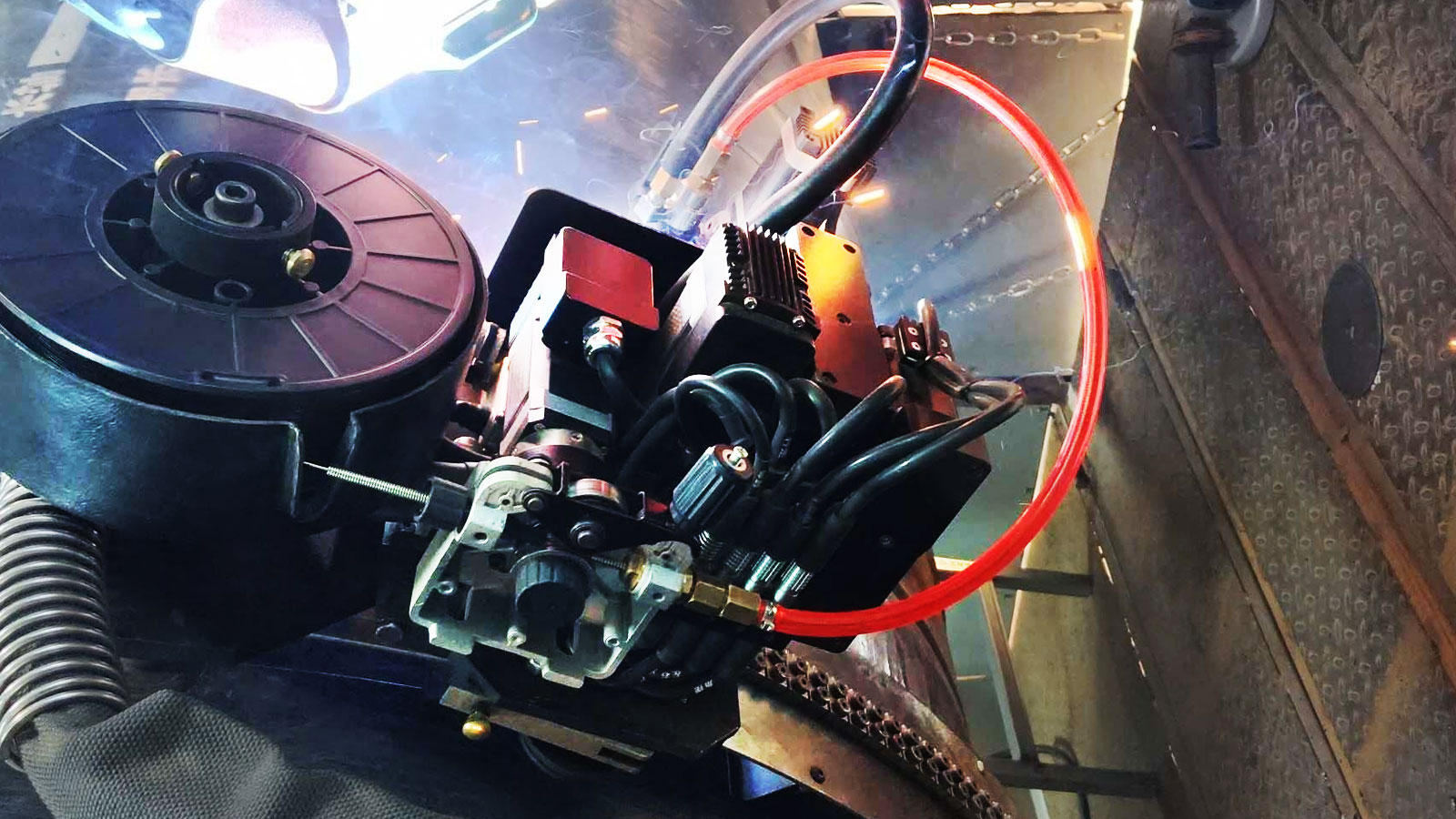
| Single-torch external welder (DW-EW-I) | Programme number, parameters that change automatically around the circumference, torch position, carriage travel | Parameter set, per-position parameter log, upload / download file from the visual touchscreen |
| Dual-torch external welder (DW-EW-II) | Straight and angular oscillation mode, arc-tracking correction events, integrated digital control status | Multi-channel process-data library — store, recall, import and export validated procedures |
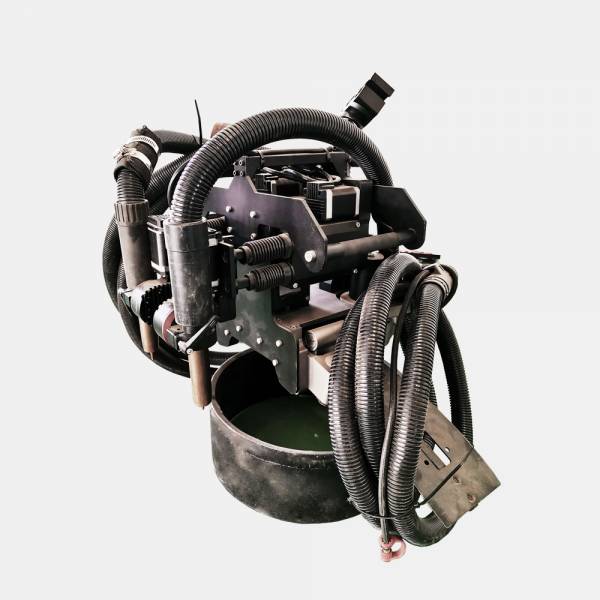
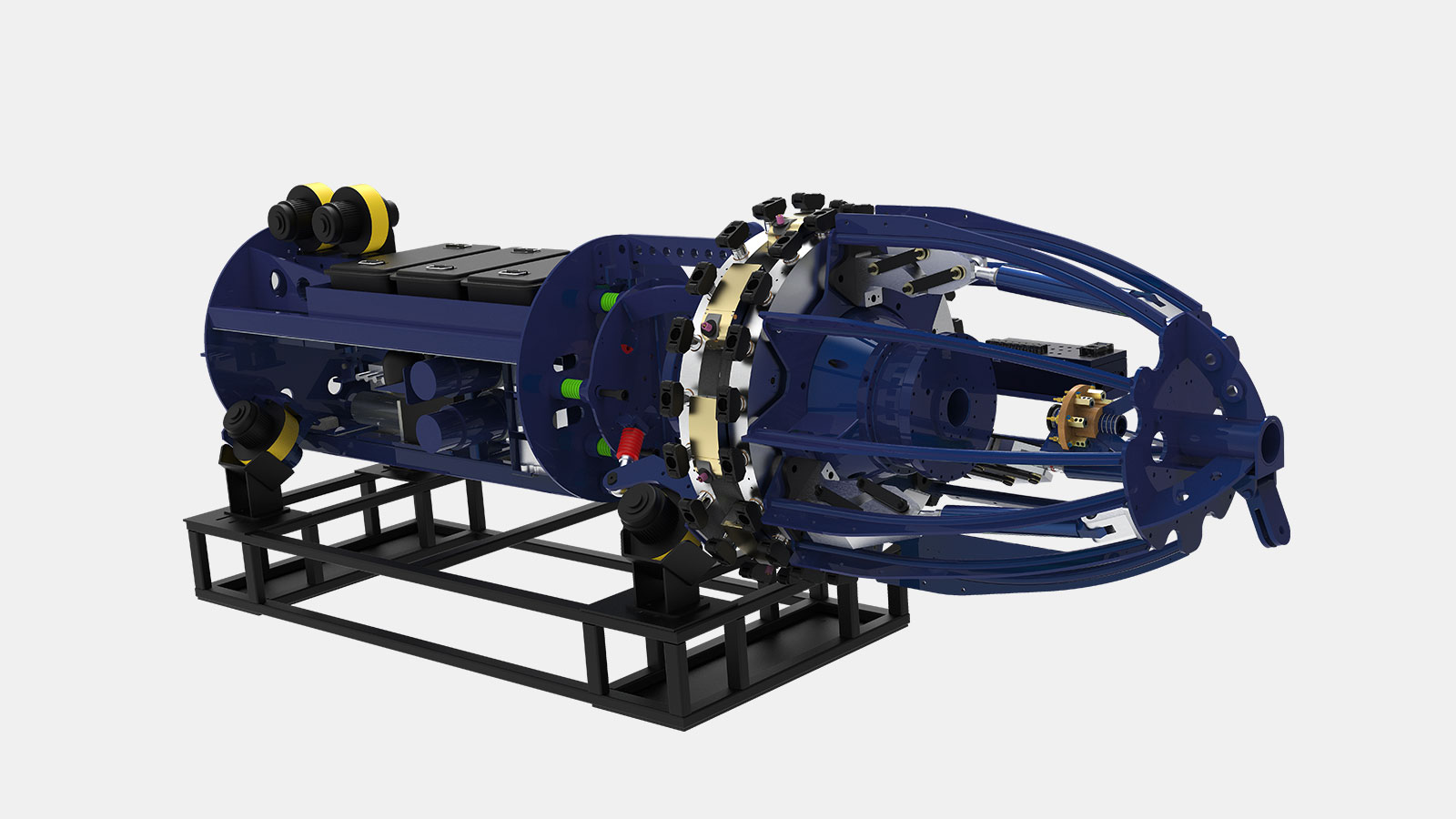
| Internal welder (DW-EH48/56 / DW48/56-8H-D) | Eight-head sequence, expansion and centring status, line-up and root timing | Root-pass execution record tied to the joint, plus the fit-up result that made it possible |
| Automatic TIG root welder | Fully programmed current, travel and oscillation sequence for the root pass | A root-pass record that is repeatable because the procedure is stored, not improvised |
The practical conclusion for a spread is simple: build the joint record around the machine that touches the joint first (the internal welder, for fit-up and root), and let the external welders append their pass data to the same joint number.
From Stored Parameters to a Traceable Joint: The Four Data Layers
Traceability is often sold as a single feature. In practice it is four layers stacked on top of each other, and a project that skips a layer will find the gap during handover.
Layer 1 — The Procedure Library
Before anything is welded, the validated procedure for each combination of diameter, wall thickness, steel grade and groove form must exist as a recallable programme rather than a sheet of paper at the control cabinet. Both external welders are built for this: the single-torch machine stores parameters in its visual touchscreen with upload and download, while the dual-torch machine manages process data across multiple internal channels with store, recall, import and export. A validated procedure that can be recalled is the foundation of every downstream record.
Layer 2 — The Process Record
The second layer is what happened while the arc was on. On the external machines, parameters change automatically with position around the circumference; on the dual-torch machine an arc-tracking system corrects deviation in real time. Both behaviours are only useful for traceability if the correction events and the applied parameters are captured against the joint rather than lost at the end of the shift.
Layer 3 — The Joint Record
The joint record is the unit the owner actually asks for: a unique joint number linked to the procedure number, the operator, the date and time, the machine, the fit-up result from the internal welder, the pass data from the external welders, and the non-destructive test result. Assembling it requires that the internal and external steps write to the same identifier — which is a workflow decision more than a hardware one.
Layer 4 — The Project Traceability Platform
The top layer is where all joint records live, are searchable and can be handed over as a digital as-built package. It can be a dedicated welding data management system or a structured database integrated with the project quality system; what matters is that a joint number entered years later returns the complete record, not a folder of scans.
Single-Torch vs Dual-Torch: What Each Machine Can Actually Export
Because the two external welders manage process data differently, they suit different traceability workflows. This is worth deciding before the spread is mobilised.
| Aspect | Single-torch DW-EW-I | Dual-torch DW-EW-II |
|---|---|---|
| Data interface | Visual touchscreen for setting, display, modification and storage of parameters | Human-machine interface plus integrated digital communication between welding machine and control cabinet |
| Data handling | Upload and download of parameter data | Multi-channel internal storage, recall, import and export |
| Position behaviour | Parameters change automatically with welding position around the circumference | Arc-tracking system corrects deviation in real time |
| Best fit for traceability | General projects and prefabrication where set-up is visible and repeatable | High-grade transmission and critical energy projects where validated procedures are recalled, not rebuilt |
| Consumable side | Standard consumables | Commonality of consumable parts, easing controlled replacement records |
The Internal Welder’s Role in the Root-Pass Record
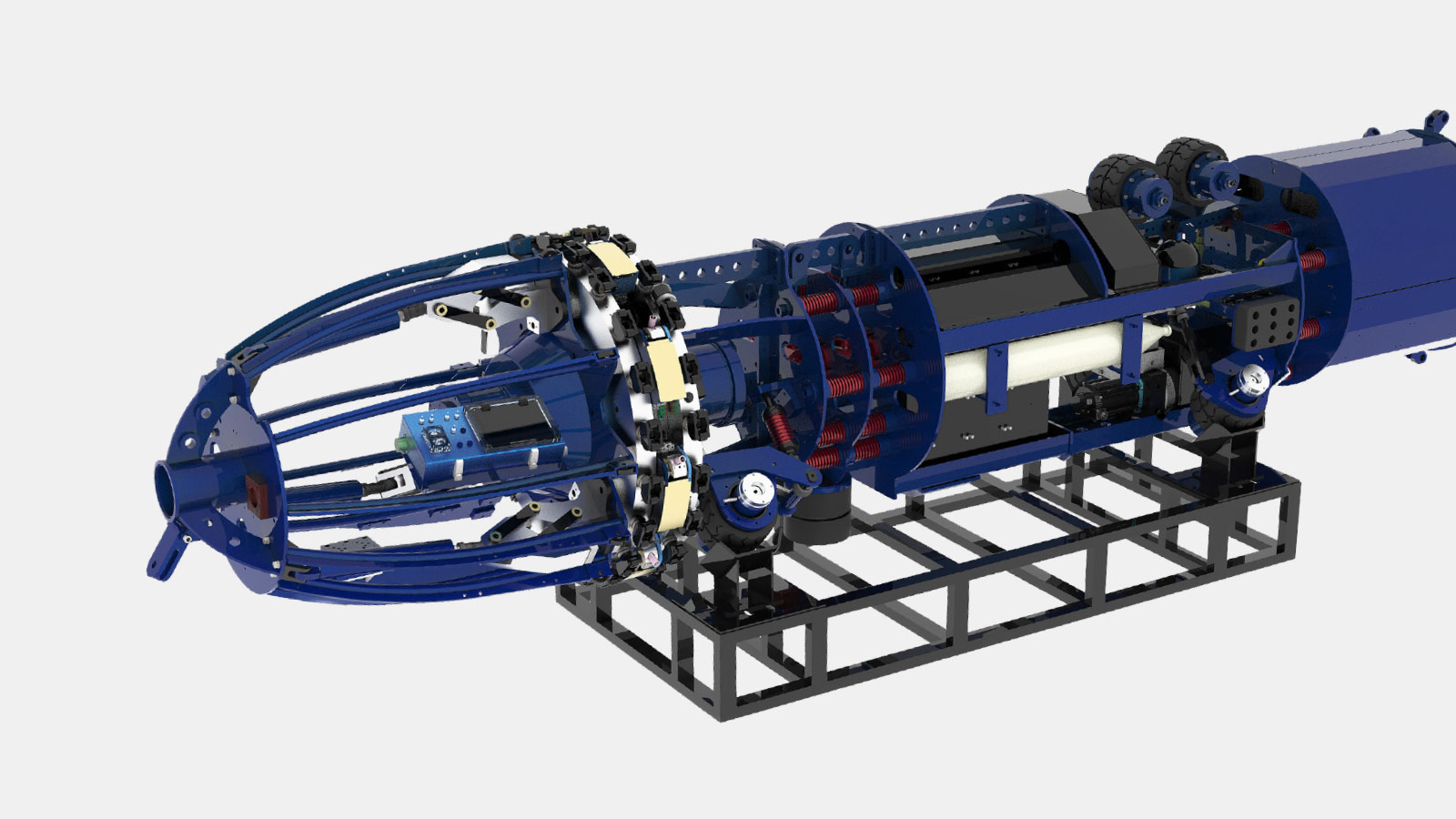
Fit-up and root are where a joint is won or lost, and they are also where the record is most often missing. Because the internal welder performs the root from inside the pipe with hydraulic expansion centring, the machine is the natural place to capture the fit-up result. Both models support this in different terrains and power situations.
| Parameter | DW-EH48/56 (lithium-battery internal welder) | DW48/56-8H-D (flexible internal welder) |
|---|---|---|
| Power / drive | Electric + hydraulic, lithium battery supply | High-torque servo electric drive, battery pack 230 AH × 3 sets |
| Applicable pipe diameter | Φ1219 – Φ1422 mm | Φ1219 – Φ1422 mm |
| Welding heads | 8 | 8 |
| Travel speed | 0 – 40 m/min | 0 – 60 m/min |
| Welding time | ≤ 90 s per pass | ≤ 120 s per pass |
| Line-up plus root | Root handled by the 8 internal heads | Line-up and root in about 5 minutes |
| Rated pressure | 5 – 7 MPa hydraulic expansion centring | 5 – 7 MPa hydraulic expansion centring |
| Altitude / temperature | ≤ 4000 m; −40 to 65 °C; humidity ≤ 90 % | 0 – 3500 m; −50 to 65 °C |
| Weight / size | 2950 kg; 5200 × 1200 × 1100 mm | 2400 kg; 4600 × 1250 × 1200 mm |
For a data workflow, the difference matters in one place: the lithium model is deployed where there is no grid and the flexible model is chosen for tight terrain and bend passage. Both write the fit-up and root outcome against the joint; the choice between them should be made on access and power, not on data capability.
Automatic TIG Root Pass: Traceability by Nature
An automatic TIG root welder is not usually described as a data product, yet it is the most naturally traceable root process in the tool kit. Current, travel speed and oscillation are programmed rather than manually varied, so the root pass is executed the same way on joint one and joint one hundred. For the owner, that means the root-pass part of the record is a stored programme plus a pass confirmation, rather than an operator’s recollection — which is exactly the kind of evidence that survives an integrity review years later.
A Three-Step Path to a Project-Level Data Loop
A spread does not need to buy a software platform to start. The loop can be built in three practical steps.
- Step 1 — Fix the identifier. Agree a single joint-numbering rule that both the internal and external crews use from day one, and print it on the joint before the root pass.
- Step 2 — Capture at the machine. Turn on and standardise export from the machines that already store data: the single-torch touchscreen upload / download, and the dual-torch multi-channel process library. At minimum, export the validated programme in use and the applied parameter set per joint.
- Step 3 — Assemble and store. Link fit-up and root data from the internal welder, pass data from the external welders and the non-destructive test result to the joint number, and store the assembled record in one searchable system before the camp moves.
Done in this order, the platform question becomes a storage decision rather than a data-collection problem, which is the difference between a traceability system that works on day one and one that is still being back-filled at handover.
Common Questions from QA/QC Managers
- Do we need special machines to have traceable joints? No. The machines already store what matters — the single-torch welder uploads and downloads parameters from its touchscreen, and the dual-torch welder manages process data across multiple channels. The missing piece is usually the joint-numbering workflow, not the hardware.
- Is the internal welder’s data useful on its own? Its value is the fit-up and root record — the step most likely to be missing. Captured against the joint number, it closes the biggest gap in the record.
- How much data should we actually export? Start with the validated procedure in use and the applied parameter set for the joint; add arc-tracking or correction events from the dual-torch machine if the project requires it. Exporting everything you cannot use adds cost without adding traceability.
- Can the same workflow run on both machine types? Yes. The identifier and the assembly step are common; only the export step differs between the touchscreen and the multi-channel process library.
Conclusion
Automatic welding already generates the data a traceable joint needs; the task is to stop letting it evaporate at the end of a shift. Fix one joint number, export the validated programme and the applied parameters from the machines that store them, add the fit-up and root record from the internal welder, and assemble it in one searchable place. Do that on the ENGINE WELDER / DENVO pipeline automatic welding range, and the digital as-built package becomes a by-product of construction rather than a reconstruction exercise at handover.
Beijing Engine Welder Technology Co., Ltd. (DENOH Group)
Tel: 010-86468776
Email: sales@denohgroup.com
WhatsApp / WeChat: 13521628344
Website: www.denohgroup.com