The easy pipeline is built first. Whatever is left — the high pass, the frozen river crossing, the hillside section with no access road, the wetland with no grid connection — is where automatic welding is now expected to go next. That shift has changed what a machine specification has to prove. Travel speed and pass count still matter, but on a winter mountain spread the deciding questions are different: will the electronics start at −40 °C, does the arc hold at 3,500 m, can the carriage climb a 30° grade, and is there power at all? This guide maps the five environmental loads a spread actually faces, and how the four machines in the ENGINE WELDER / DENVO pipeline automatic welding range are specified against them.
Why the Hardest Ground Now Sets the Specification
Owners no longer separate ‘normal’ and ‘difficult’ sections into different welding philosophies. A single transmission line is expected to meet one quality standard from the coastal terminal to the mountain pass, which means the automatic welding equipment has to be deployable across that whole range without a change of method. Manual welding adapts to bad conditions by slowing down and relying on the operator; automatic welding adapts by being designed for the envelope in advance. The practical consequence is that environmental specifications — temperature, altitude, humidity, grade and power — now sit alongside diameter and wall thickness as primary selection criteria.
The Five Environmental Loads on a Pipeline Welding Spread
It helps to think of the site as applying five separate loads to the equipment. A machine can be strong on one and weak on another, so each has to be checked independently.
- Cold: starting, lubricants, battery chemistry and the human operator all behave differently below −20 °C, and the machine’s rated envelope is what separates a plan from a hope.
- Altitude: thin air reduces cooling margin, changes shielding-gas behaviour and derates engine power on any generator-backed supply.
- Humidity and precipitation: insulation resistance, condensation inside control cabinets and rust on fit-up surfaces all become maintenance items.
- Terrain: grade, bend radius and access decide whether a machine can physically reach the joint, not just whether it can weld it.
- Power availability: on sections with no mains, whether the machine carries its own energy store decides the whole mobilisation plan.
A Machine-by-Machine Adaptability Map
The four machine types answer different loads. The internal welder carries the heaviest environmental burden because it also has to fit inside the pipe and hold line-up, so its envelope is the one to read most carefully.
| Machine | Rated envelope (from product data) | Loads it answers best |
|---|---|---|
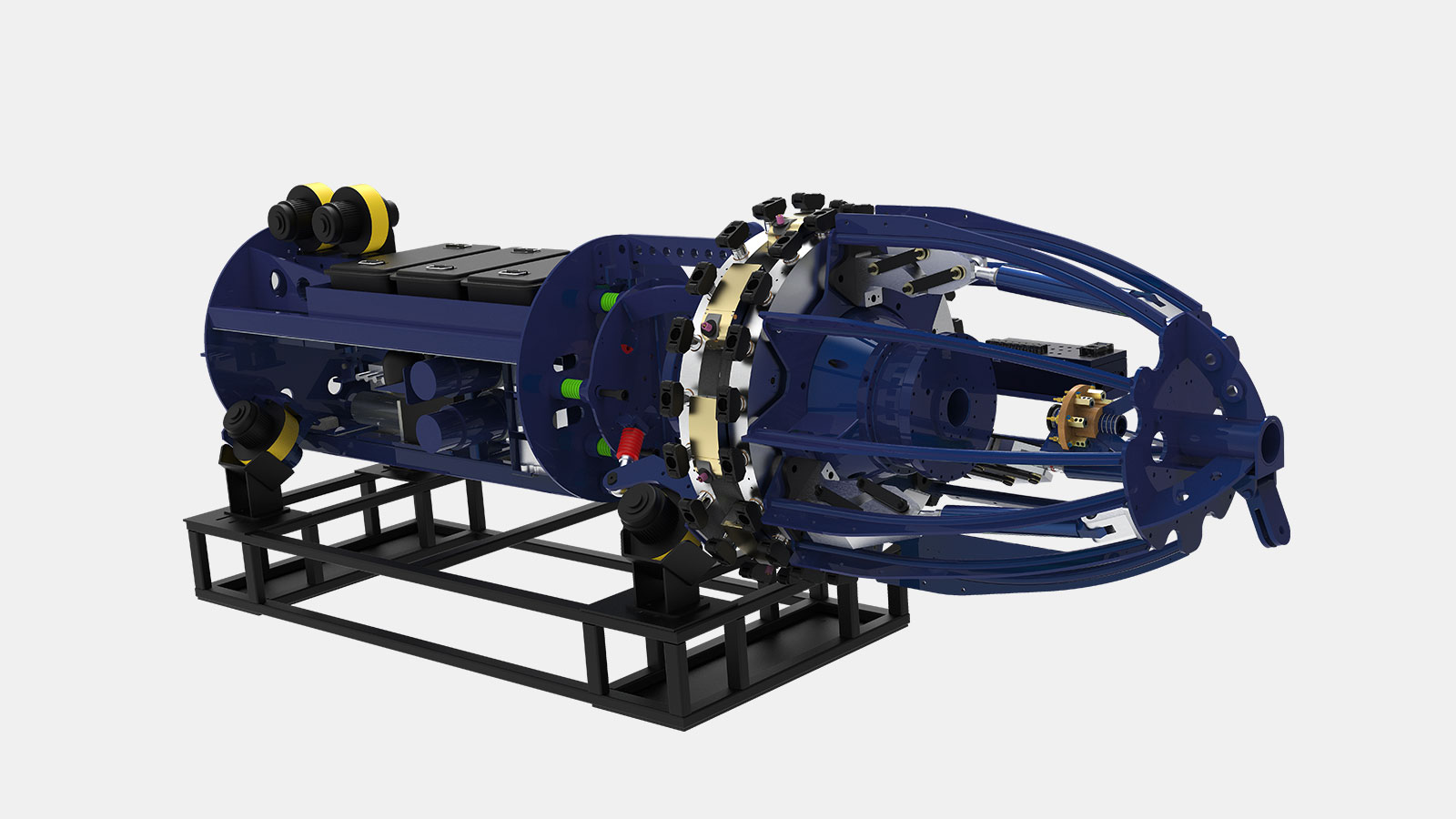
| Internal welder — lithium (DW-EH48/56) | −40 °C to 65 °C, altitude ≤4,000 m, humidity ≤90%, wall thickness 10–35 mm, grade ≤30°, 5D bend | Cold, altitude, humidity; off-grid via its own power source |
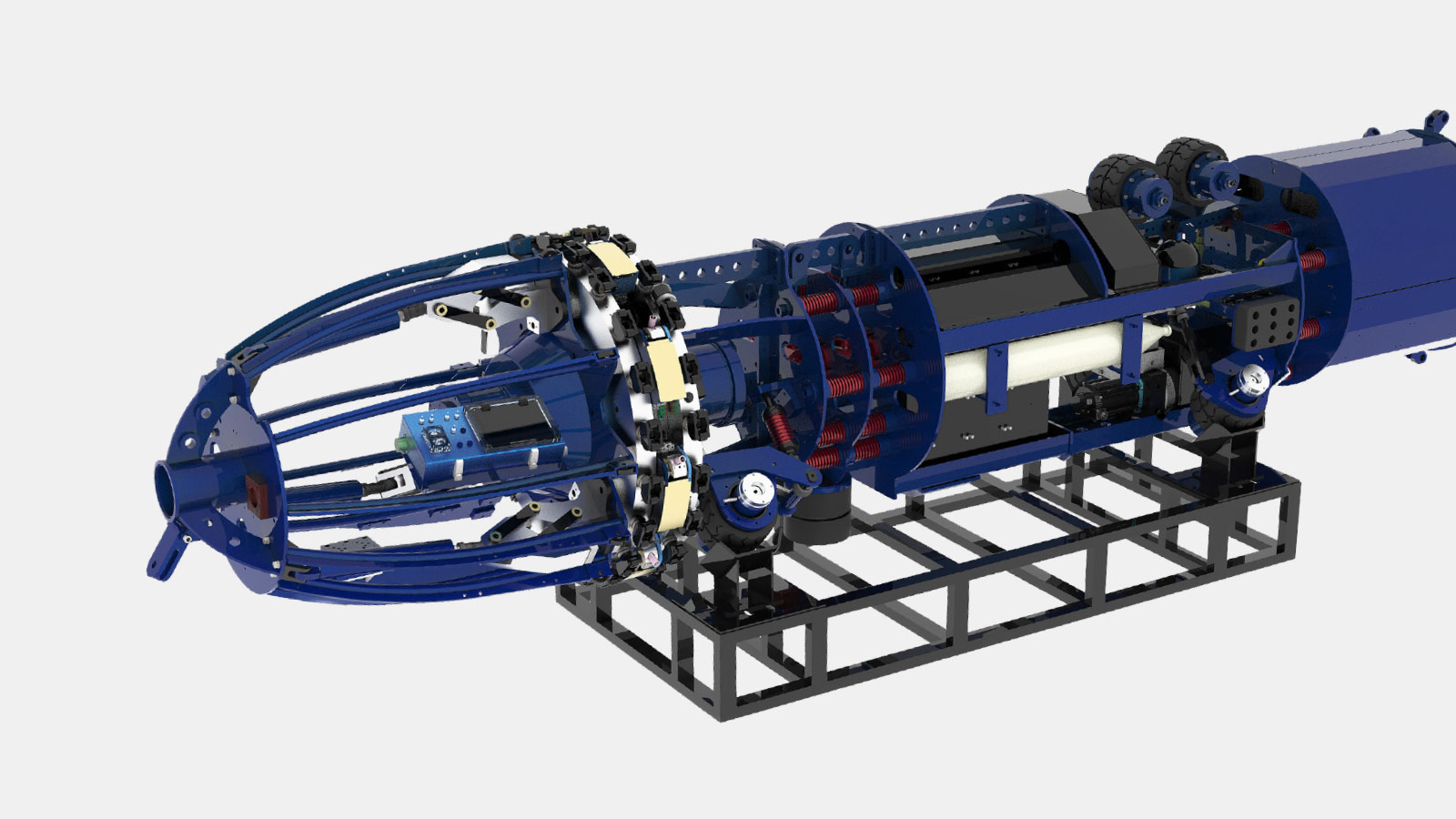
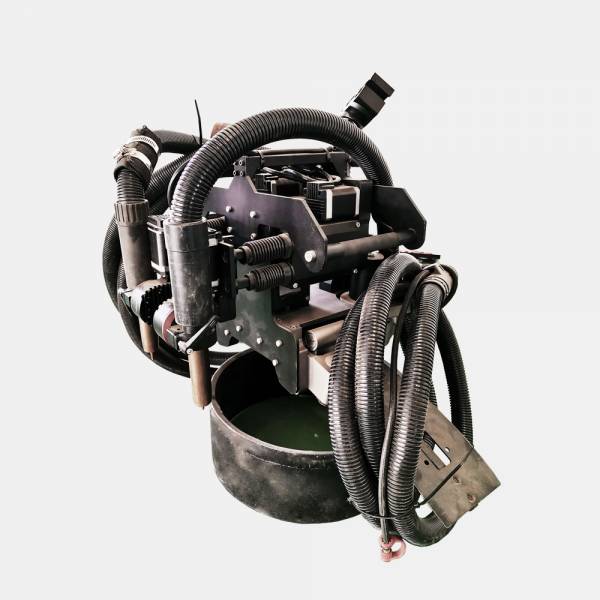
| Internal welder — flexible (DW48/56-8H-D) | −50 °C to 65 °C, altitude 0–3,500 m, grade ≤30°, 5/6D bend, compact 2,400 kg body | Terrain, tight bends, mountain and hillside sections |
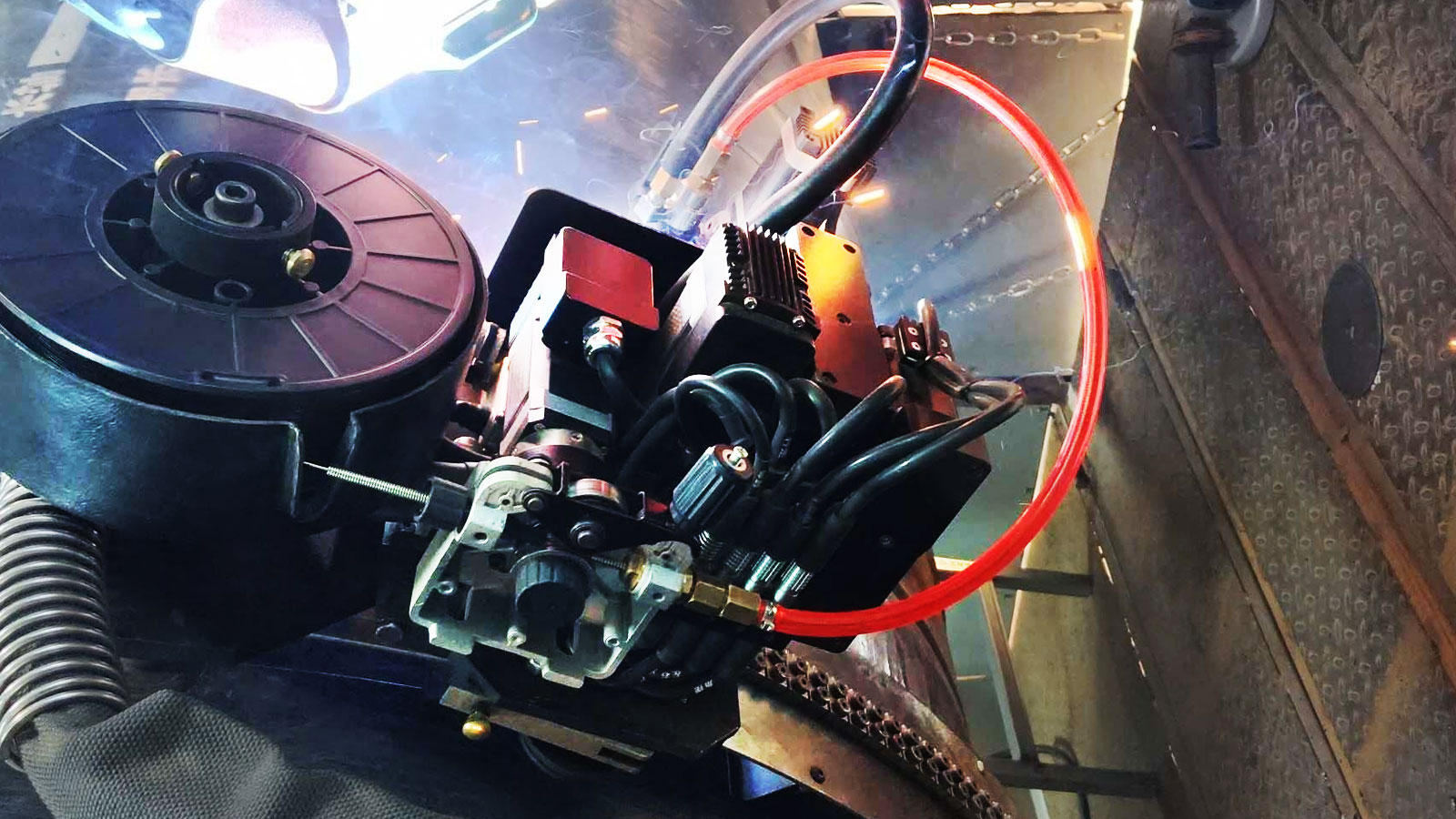
| External welder — single torch (DW-EW-I) | Φ219–Φ1,422 mm, split ring track, gear-rack drive, parameters auto-change by position | Consistency in temperature swings; general and prefab work |
| External welder — dual torch (DW-EW-II) | Φ219–Φ1,422 mm, straight and angular oscillation, arc auto-tracking, digital control | High-grade sections where pace and reproducibility both matter |
Cold: How −40 °C and −50 °C Change the Job
Cold is not a single problem. It attacks the battery, the hydraulics, the wire feed and the person. The flexible internal welder is rated down to −50 °C and the lithium internal welder to −40 °C, which matters because the internal welder is the first machine on a joint and cannot be substituted by hand as easily as a fill pass. Practical cold-weather work adds pre-heat planning, keeping spares and consumables above freezing overnight, and accepting that the rated envelope is a starting point rather than a guarantee — a machine rated to −40 °C still needs warm storage between shifts.
High Altitude: Thin Air, Same Arc
Above roughly 3,000 m the air is thin enough to change three things at once: cooling effectiveness drops, shielding-gas coverage becomes less forgiving in wind, and any engine-driven support equipment loses power. Both internal welders state an altitude limit — ≤4,000 m for the lithium machine, 0–3,500 m for the flexible machine — which is the number to design the spread around. On high passes the practical measures are wind shielding around the joint, an extra gas-flow check, and scheduling the most demanding root passes for the calmest part of the day.
Humidity and Rain: The Insulation Question
The lithium internal welder is rated for humidity up to 90%, and that figure is about more than comfort. In tropical and coastal construction, condensation forms inside control cabinets as the machine cools overnight, and moisture on fit-up surfaces affects the root pass. The counter-measures are routine but easy to skip: let machines equalise to ambient temperature before opening cabinets, keep the joint area covered between passes, and treat electrical insulation checks as a shift-start task rather than an annual event.
Terrain: Grades, Bends and Getting There
A machine that welds perfectly on flat ground but cannot reach the joint is no use on a hillside. The flexible internal welder is the clearest answer to this load: a 30° grade limit, passage through 5/6D bends, and a body of 2,400 kg at 4,600 × 1,250 × 1,200 mm, sizeably more compact than the 2,950 kg lithium machine. Wireless remote control means the operator can stand clear of the joint on unstable ground. On mountain and hillside sections this combination of compact body, bend tolerance and remote operation is what makes the difference between an automatic spread and a manual one.
Off-Grid Power: When There Is No Mains
Remote sections rarely have a reliable supply at the joint. The lithium internal welder carries its own energy store and is described as suited to no-grid scenarios, with a 30 L shielding-gas tank on board, which removes the cable run and the generator from the internal-welding step entirely. The flexible machine uses a 230 AH × 3 battery pack with a DC 24 V working voltage for the same reason. For the external welders, the power question is answered upstream by the welding power source; on off-grid spreads this is where an engine-driven generator set earns its place in the spread plan.
The Automatic TIG Root Pass in Harsh Conditions
Automatic TIG is often the preferred root process on high-grade and low-temperature lines because the arc is inherently controlled and the heat input is precise — characteristics that do not depend on the operator’s hand steadiness at the end of a cold shift. Because the root sequence is fully programmed, the same procedure can be repeated at −30 °C on a mountain pass and in a temperate prefab yard, which is exactly what a single line crossing several climate zones needs. The trade-off is that TIG is more sensitive to wind and drafts, so on exposed sites the root pass benefits most from a windbreak.
Matching the Machine to the Site: A Selection Table
Read the site conditions first, then pick the machine that answers the load that will actually stop the spread. The table below is a starting point for that conversation.
| Site condition | Load that dominates | Machine to lead with |
|---|---|---|
| Winter mountain pass (−30 °C and below) | Cold starting and battery/hydraulic behaviour | Flexible internal welder (−50 °C rated), heated storage for spares |
| High plateau above 3,000 m | Altitude derating and wind on shielding gas | Lithium internal welder (≤4,000 m), windbreak at the joint |
| Coastal / tropical, high humidity | Condensation and insulation | Lithium internal welder (≤90% RH), cabinet warm-up discipline |
| Steep hillside, tight bends | Access, grade and bend radius | Flexible internal welder (30° grade, 5/6D bend, compact body) |
| No mains power at the joint | Energy supply | Lithium internal welder (on-board store) plus engine-driven source for external passes |
| High-grade line, tight schedule | Pace and reproducibility | Dual-torch external welder with arc auto-tracking |
A Pre-Mobilisation Checklist for Extreme Sites
Environmental failures are almost always procedural rather than mechanical. Before a spread moves to a hard section, confirm the following:
- Each machine’s rated temperature, altitude and humidity is written into the method statement, not just held in a catalogue.
- Warm storage and battery-management arrangements are defined for cold sites, including overnight spares.
- Wind protection is planned for exposed root passes, particularly for automatic TIG and for shielding-gas coverage at altitude.
- The power plan states explicitly whether each joint is welded from a mains supply, an on-board store or an engine-driven source.
- Access, grade and bend limits have been walked and matched to the machine that will actually be deployed.
- A cold-start and warm-up routine is documented so the first joint of the shift is not treated as a test.
Conclusion and Action Points
Extreme sites reward equipment that was specified for them in advance. The internal welders carry the widest environmental envelope — −50 °C and 30° grades for the flexible machine, −40 °C, ≤4,000 m and 90% humidity for the lithium machine — while the external welders deliver the pace and repeatability that keeps a high-grade line on schedule. Match the machine to the load that will stop your spread, document the envelope in the method statement, and the hardest section stops being a special case. Explore the full ENGINE WELDER / DENVO pipeline automatic welding range to build the right combination for your route.
Beijing Engine Welder Technology Co., Ltd. (DENOH Group)
Tel: 010-86468776
Email: sales@denohgroup.com
WhatsApp / WeChat: 13521628344
Website: www.denohgroup.com/contact/