
Girth weld quality is decided at the metal level. On modern cross-country and in-plant pipeline projects, owners no longer accept only a good-looking bead: they demand recorded heat input, impact toughness at design temperature, hardness limits in the heat-affected zone (HAZ), and traceable procedure data. This guide explains how a full automatic pipeline welding fleet – a single-torch external welder (DW-EW-I), a dual-torch external welder (DW-EW-II), an internal root welding machine (DW-EH48/56 lithium or DW48/56-8H-D flexible), and automatic TIG equipment – controls weld metallurgy, when post-weld heat treatment (PWHT) is actually required, and which mechanical properties you should verify before hydrotest.
Why Mechanized Welding Changes the Metallurgy Conversation
In manual stick welding, heat input varies from operator to operator and from the 12 o-clock to the 6 o-clock position. In orbital mechanized welding the machine is the constant: travel speed, wire feed and oscillation follow a stored schedule, so the cooling rate t8/5 – the single most important driver of HAZ toughness and hardness – becomes repeatable joint after joint. That is what makes weld-metal and HAZ properties auditable rather than anecdotal.
| Machine | Metallurgical lever | What it stabilizes |
|---|---|---|
| DW-EW-I single-torch external welder | Welding parameters change automatically with clock position; toothed steel track with rack drive | Constant travel speed and heat input through 5G positions |
| DW-EW-II dual-torch external welder | Dual torches with linear + angular oscillation and automatic arc tracking | Bead shape, sidewall fusion, consistent layer thickness |
| Internal root welder DW-EH48/56 (lithium) | 8 welding units, internal clamp expansion 5-7 MPa, 30 L shielding gas | Clean, uniform internal root bead; low-hydrogen root |
| Flexible internal welder DW48/56-8H-D | 8 units, wire 0.9-1.2 mm, 230 Ah x 3 battery, positioning within 120 s | Repeatable root pass on wall 10-35 mm pipe |
| Automatic TIG (root/tack welding) | Separately controlled current, pulsing and filler | Very low, precisely limited root heat input |
Heat Input, Cooling Rate and the t8/5 Concept
Heat input (kJ/mm) is approximately arc voltage x current / travel speed. In pipeline girth welds its real meaning is the cooling rate between 800 C and 500 C (t8/5). Fast cooling hardens the HAZ and raises cold-cracking risk on higher-grade steels; slow cooling coarsens grains and can reduce toughness. Mechanized systems manage this by schedule, not by feel.
Single-Torch External Welder: Position-Compensated Heat Input
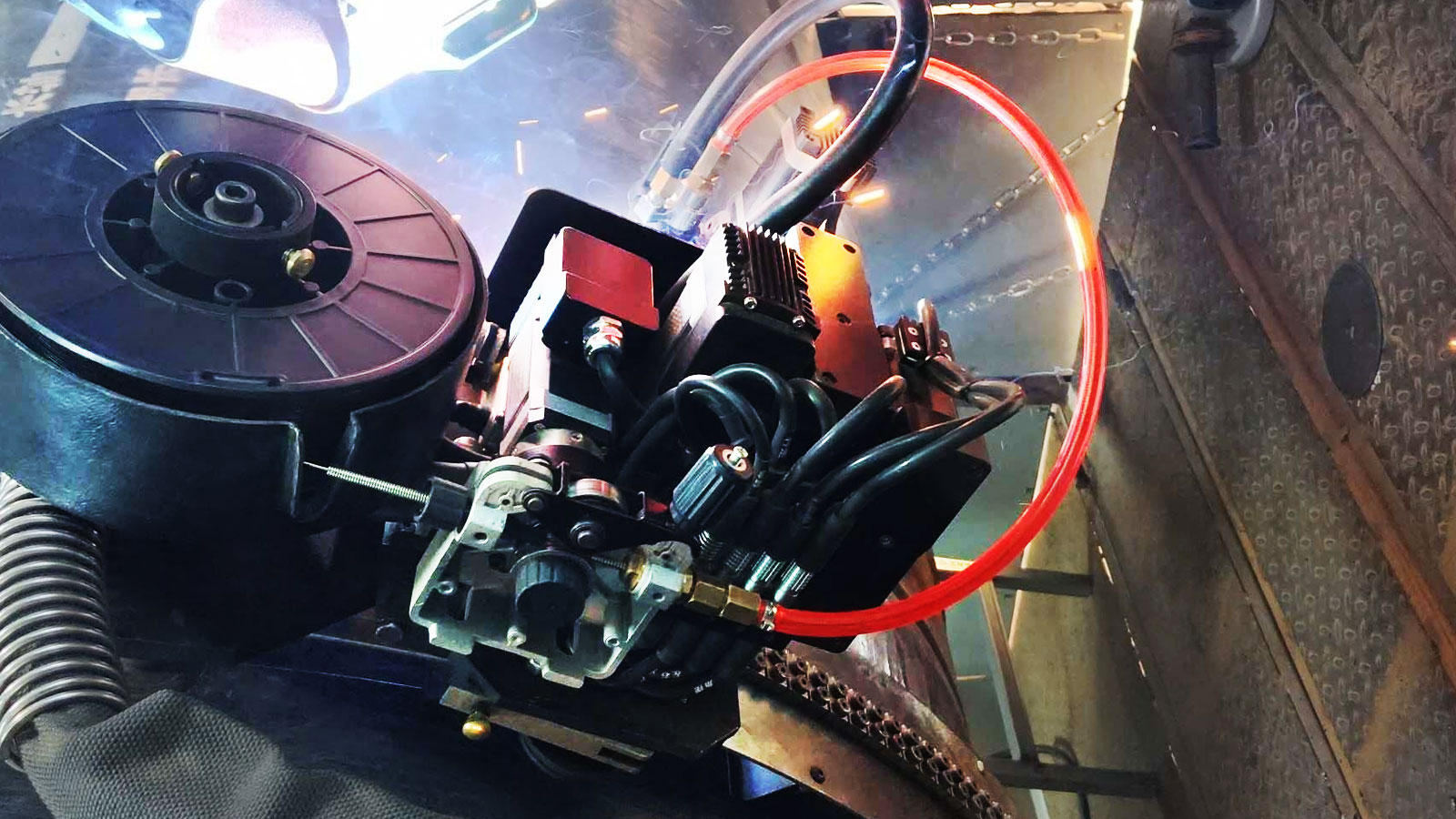
The DW-EW-I automatically adjusts welding parameters as the carriage travels around the pipe, so the energy delivered at the overhead position matches the flat position. Combined with the toothed-rack steel track, the travel speed stays stable – which keeps the t8/5 window inside the qualified range of the WPS for every quadrant of the joint. Parameters are uploaded and downloaded through the touch screen, so the metallurgy of joint No. 500 matches joint No. 1.
Dual-Torch External Welder: Two Arcs, Managed Interaction
The DW-EW-II carries two torches with straight and angular oscillation plus automatic arc tracking. The second torch can act as a thermal tempering bead on the preceding pass – a recognized metallurgical mechanism that refines the prior-pass microstructure while doubling deposition. Because the arc tracker keeps the bead centered, the fusion line stays clean, which is the primary defense against lack-of-fusion defects that then concentrate stress and skew hardness readings.
Internal Root Welding: Metallurgy Starting at the First Pass
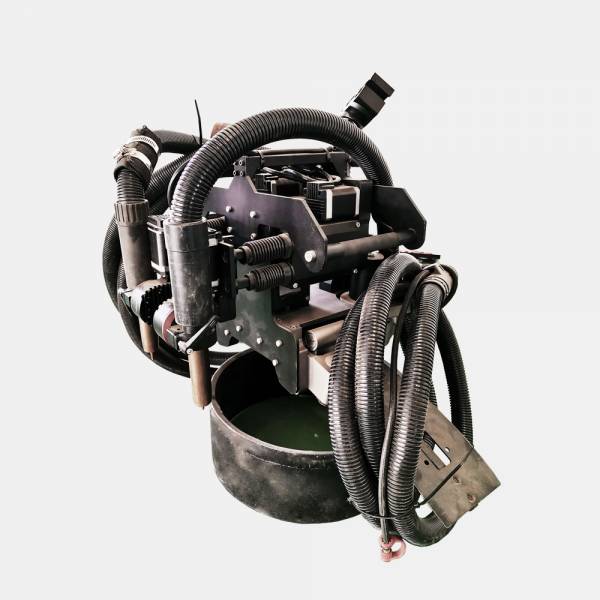
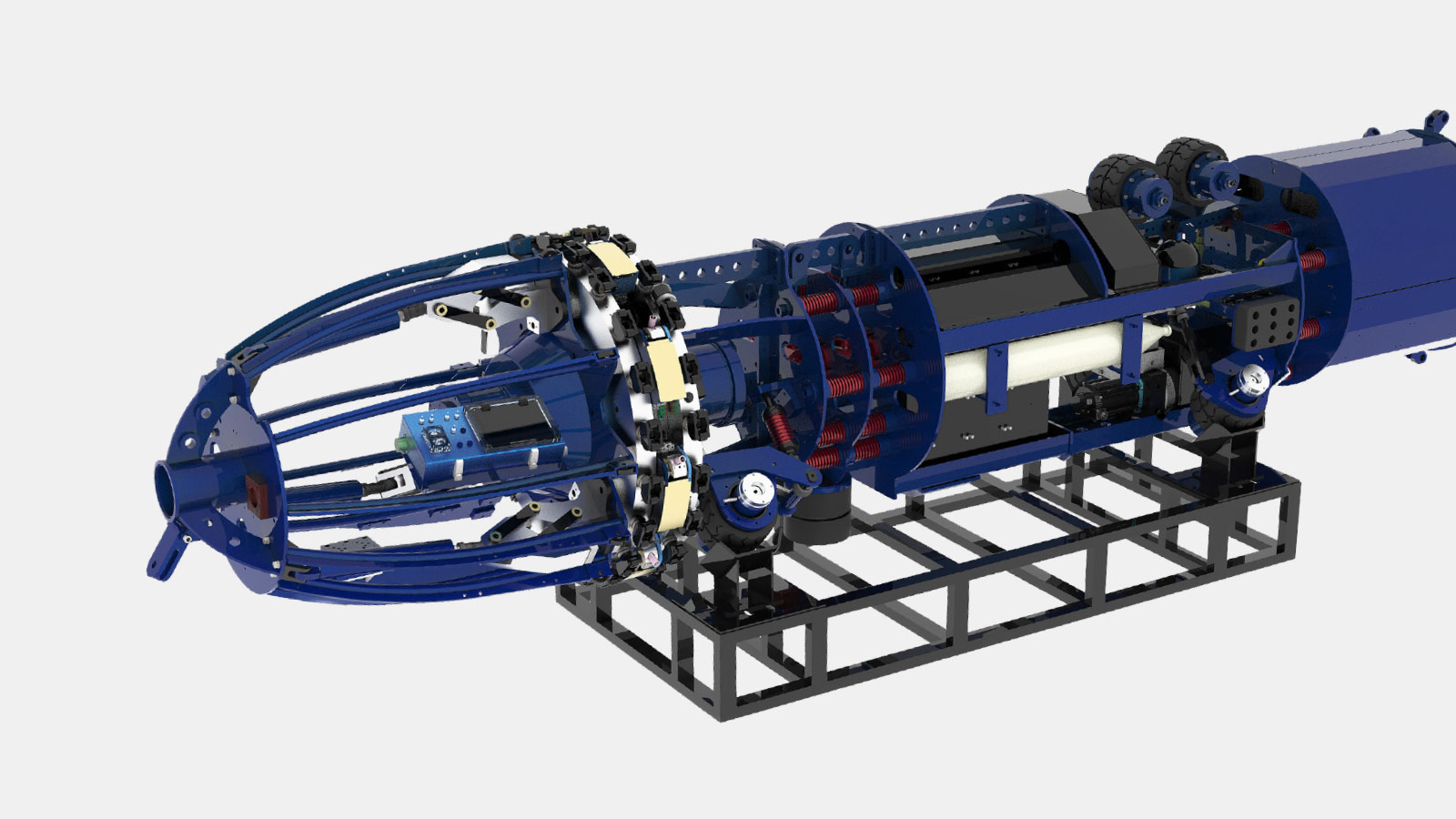
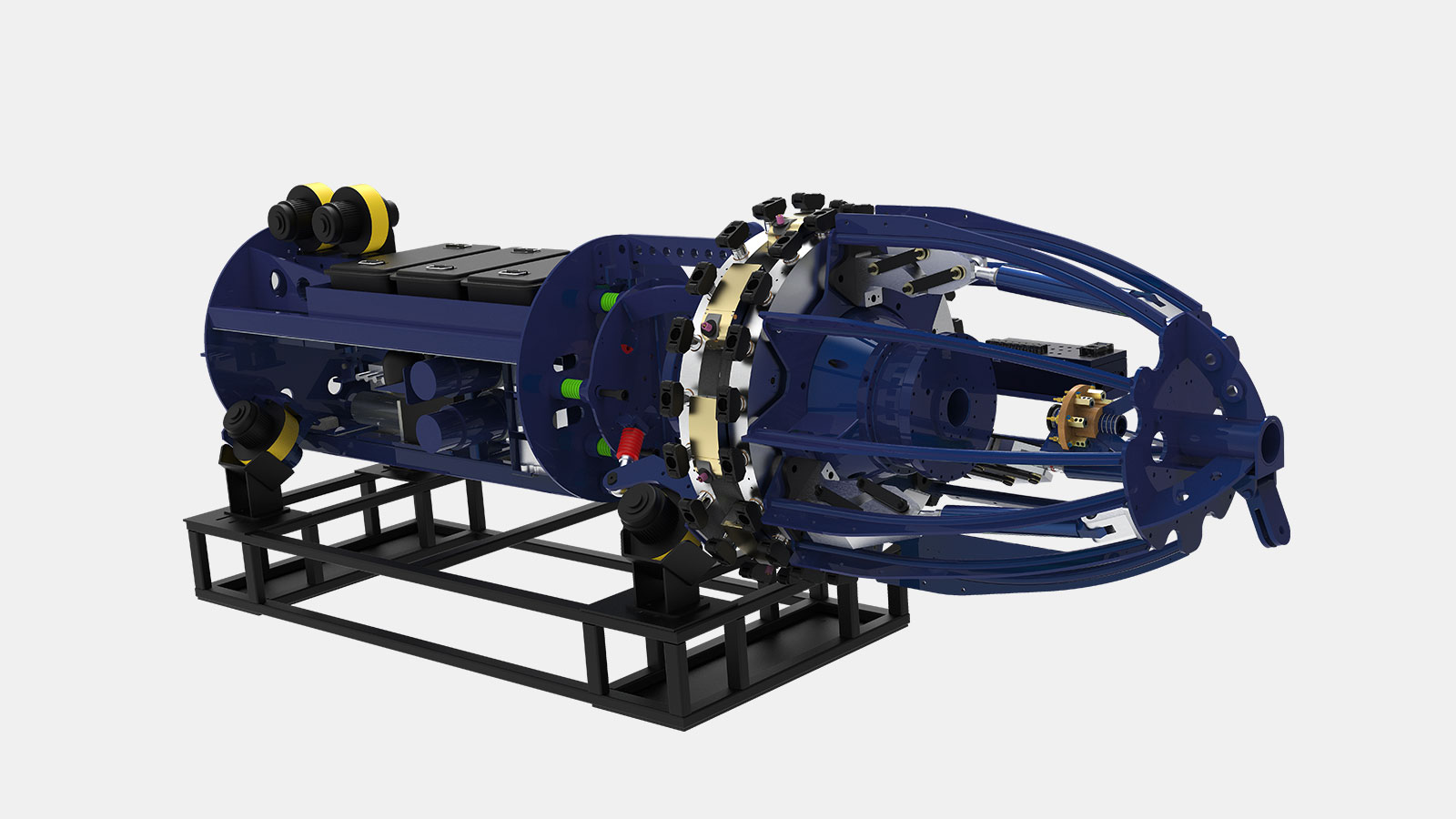
Root-pass metallurgy decides the whole joint. The DW-EH48/56 lithium machine clamps internally (hydraulic expansion 5-7 MPa) and welds all units simultaneously, producing a root bead from inside the pipe without a backup crew inside the line. The flexible DW48/56-8H-D performs internal positioning and root welding in roughly 5 minutes, working on wall thicknesses from 10 to 35 mm. A machine-made root means uniform penetration and low, controlled dilution – the strongest start against hydrogen-induced cracking.
Automatic TIG: The Low-Heat-Input Root Option
Automatic TIG (orbital GTAW) remains the reference root process where the specification demands minimal heat input and an internally smooth bead – thin-wall pipe, stainless and duplex lines, and qualification work. Note: automatic TIG is not published as a standalone product datasheet on this site; treat its parameters as WPS-defined and verify them during procedure qualification.
Steel Grades, Carbon Equivalent and Preheat Discipline
For L245-L555 (X42-X80) line pipe, weldability is first judged by carbon equivalent (CE(IIW) = C + Mn/6 + (Cr+Mo+V)/5 + (Ni+Cu)/15). Higher CE means higher hardenability: the same heat input produces a harder HAZ, so preheat and low-hydrogen practice matter more. The rules of thumb below are general industry guidance, not product parameters – always defer to the governing WPS and pipe mill data.
| Item | General guidance (verify against WPS) | How the machine fleet supports it |
|---|---|---|
| Preheat temperature | Rises with CE, wall thickness and hydrogen level; commonly verified 60-150 C for mid/high grades | Internal machines reach the joint fast; interpass control via stored schedules |
| Hydrogen control | Low-hydrogen consumables plus dry shielding gas; bake per consumable datasheet | DW48/56-8H-D uses 0.9-1.2 mm wire with regulated gas supply |
| Interpass temperature | Kept within the WPS window to avoid uncontrolled t8/5 shifts | Position-based parameter compensation (DW-EW-I) keeps energy per layer even |
| Wall thickness 10-35 mm | More mass = faster quench; thick sections need earlier preheat attention | Internal machines are rated for the 10-35 mm window |
When Is PWHT Actually Required on Pipeline Girth Welds?
Mainline girth welds are normally left as-welded: field PWHT of thousands of joints is impractical and unnecessary when the WPS is properly qualified. PWHT enters the picture in specific, definable cases. The decision belongs to the project specification, the applicable code and the pipe grade – the list below is the usual decision map.
- Wall thickness above the code threshold for the grade (station piping and heavy-wall tie-ins are the typical cases).
- Service requirements: sour service (NACE MR0175/ISO 15156 hardness limits, typically 22-24 HRC class limits), high-temperature service, or hydrogen-rich product.
- Steel grade and CE: some high-CE or specialty steels specify stress relief regardless of thickness.
- Owner specification: many operators require local PWHT on branch connections, hot taps and heavy-wall field joints.
- Repair welds: major repairs on thick/high-grade pipe may require re-heat-treatment of the local area per the repair procedure.
Where PWHT is required, its value depends on input quality: a weld made with recorded, repeatable heat input behaves predictably under soaking temperature and controlled cooling. That predictability is exactly what the mechanized fleet provides. Note also what mechanization cannot do: PWHT does not repair a lack-of-fusion defect, and hardness surveys after PWHT will still find geometry-driven stress raisers. Get the welding right first.
Mechanical Properties You Should Verify – and What Proves Them
Procedure qualification and production weld testing revolve around a compact set of properties. Each one maps to a controllable machine variable, which is why data-capable equipment shortens the path from test coupon to production approval.
| Property / test | What it detects | Machine variable that controls it |
|---|---|---|
| Tensile test (weld transverse) | Understrength weld metal, fusion-line failure | Filler selection, dilution, layer sequence |
| Charpy V-notch (weld + HAZ at test temperature) | Low toughness from fast cooling or coarse grains | Heat input schedule, tempering-bead effect (dual torch) |
| Hardness survey (capped at 10 pt HV, or 22-24 HRC for sour) | Hard HAZ – cold cracking and sour-service risk | Preheat discipline, heat input, t8/5 control |
| Root and face bend / side bend | Lack of fusion, internal concavity, cracks | Arc tracking accuracy, root machine alignment |
| Macro etch / nick-break | Penetration, bead spacing, slag | Oscillation width and dwell settings |
Metallurgical Defects: Origin, Machine-Level Prevention
| Defect | Metallurgical origin | Prevention lever in the fleet |
|---|---|---|
| Hydrogen-induced (cold) cracking | Diffusible H + hard microstructure + stress | Low-H wire 0.9-1.2 mm, dry gas, position-stable heat input, preheat |
| Lack of side-wall fusion | Insufficient wetting, arc wander | Automatic arc tracking and linear/angular oscillation (DW-EW-II) |
| Coarse-grained weak HAZ | Excessive heat input on thin root passes | Automatic TIG or internal machine root with tight schedule |
| Centerline segregation / cracking | High dilution and concave bead crown | Controlled root bead geometry from internal welding |
| Inconsistent toughness joint-to-joint | Operator-dependent heat input | Stored parameter sets, touch-screen upload/download |
Practical Workflow: From WPS to Recorded Metallurgy
- Qualify the WPS with the same machine model that will run production – the DW-EW-I and DW-EW-II share consumables, which simplifies the qualification matrix.
- Store the qualified parameter sets on the touch screen; upload/download them per crew and re-import after any change request.
- Record heat input per joint (dual-torch units store multi-channel process data) and archive it with the weld number.
- Watch the first 100 joints with hardness and NDT sampling; feed results back into the parameter library, not into verbal instructions.
- Reserve PWHT stations for tie-ins, heavy-wall and repair welds identified by the project spec.
Frequently Asked Questions
Does the dual-torch welder change the weld metallurgy compared with single torch?
The deposited metal chemistry stays governed by the wire and base metal dilution; what changes is thermal history. The trailing interaction and tempering-bead effect of the second torch typically refine the preceding pass, and the multi-channel data record makes the thermal history auditable.
Can we skip preheat on X70 if the machine keeps heat input constant?
No. Constant heat input is necessary but not sufficient: preheat follows the WPS, which is built from CE, wall thickness, hydrogen level and ambient conditions. Machines control execution; the metallurgical envelope is still defined by the qualified procedure.
Is PWHT needed after every repair weld?
Only when the project or code requires it for that grade, thickness and repair class. Minor grinding and re-welding within the qualified repair procedure usually does not trigger PWHT; heavy repairs on thick or sour-service lines often do.
What hardness limit should we accept?
Follow the governing document: standard onshore lines commonly work with a 10-point HV cap per code tables, while sour service applies the NACE MR0175 / ISO 15156 material class limits. State the limit in the ITP and enforce it on the first production joints.
Conclusion
Weld metallurgy on automated pipeline projects is not an abstract laboratory topic – it is the sum of travel speed stability, position-compensated heat input, low-hydrogen consumables and recorded data. A fleet built around the DW-EW-I single-torch external welder, the DW-EW-II dual-torch external welder, the DW-EH48/56 lithium or DW48/56-8H-D flexible internal root welder, and automatic TIG for critical roots gives you repeatability at every layer, and gives your PWHT and hardness decisions a factual basis instead of an argument.
Beijing Engine Welder Technology Co., Ltd. (DENOH Group)
Tel: 010-86468776 | Email: sales@denohgroup.com
WhatsApp/WeChat: 13521628344 | Visit /contact/ for a metallurgy-oriented welding solution review.