No pipeline spread has ever been stopped by a shortage of welding machines. What stops it is the shortage of operators who understand the process window well enough to keep those machines running at acceptance quality. The move from manual to automatic welding is therefore not a purchasing decision alone — it is a competence decision. This guide sets out what really changes in the operator’s job, how the four machine types in the ENGINE WELDER / DENVO pipeline automatic welding range demand different competencies, and how to structure a training and ramp-up programme that reaches target productivity without paying for it in reject rates.
Why Automatic Welding Changes the Operator’s Job, Not Just the Tool
A manual welder earns a reputation through hand skill: arc length, travel angle, bead placement and pool control, all governed by reflex built over years. An automatic welding operator earns one through process stewardship. The machine now controls travel speed, oscillation, arc length and parameter change around the circumference, so the operator’s value migrates to the things the machine cannot manage for itself.
- Process ownership: selecting and verifying the correct programme for pipe diameter, wall thickness, steel grade and groove form before the arc starts.
- Set-up discipline: track mounting, torch height and work angle, cable routing, gas flow and ground return — the variables that decide whether a valid programme also produces a valid weld.
- Real-time reading: interpreting the arc, the pool and the bead profile as they form, and knowing which parameter — not which hand movement — needs to change.
- Fault diagnosis: separating a machine fault from a consumable fault from a fit-up fault instead of stopping the spread.
- Data discipline: recording what was welded with which programme, so a good result can be repeated and a bad one traced.
Four Machines, Four Operator Profiles
The four automatic machines are not interchangeable from a training point of view. Each concentrates difficulty in a different place, and the curriculum has to reflect that.
Single-Torch External Welder (DW-EW-I): The All-Rounder
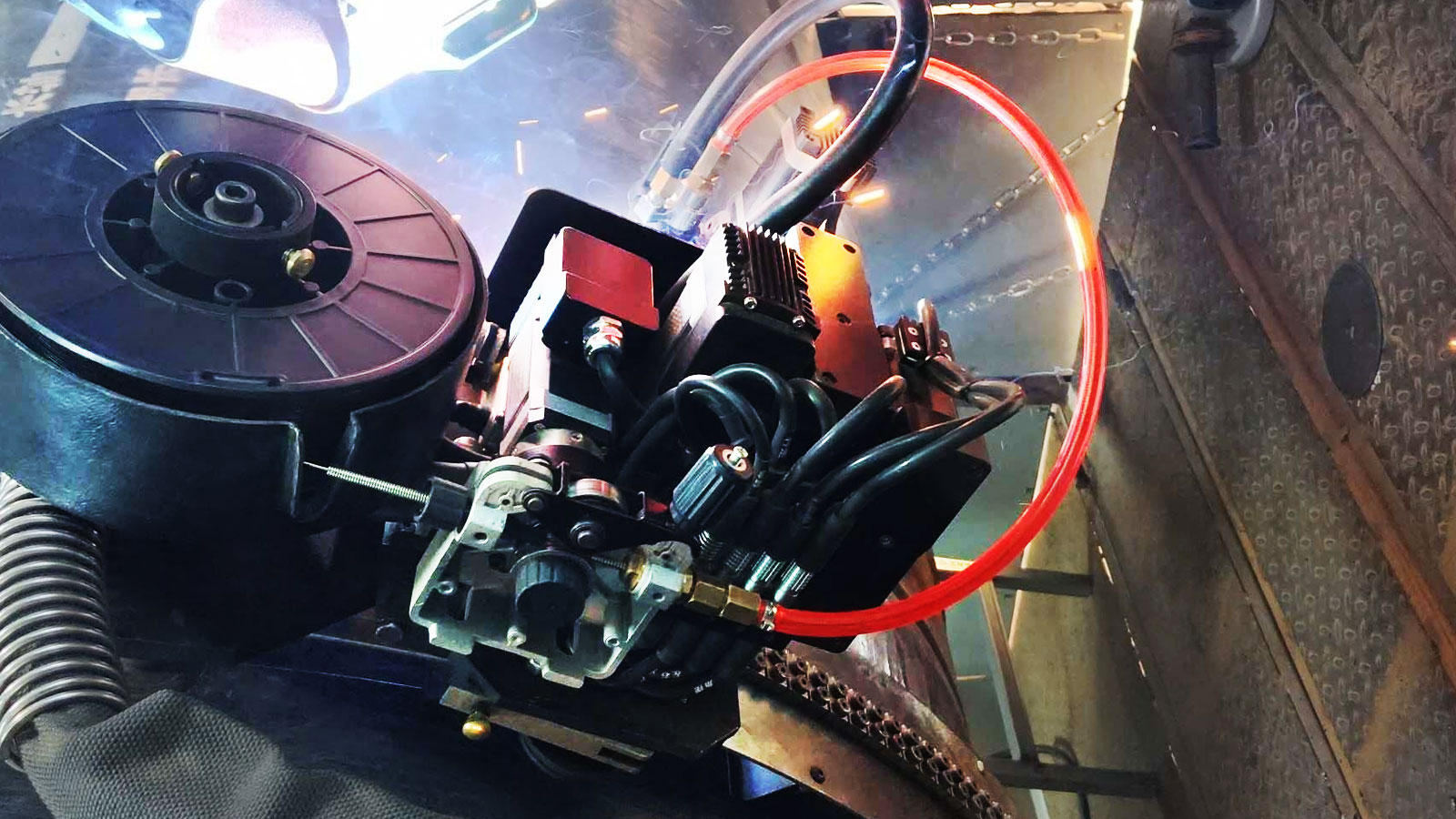
The single-torch external welder is the reference machine and the best training platform in the range. A perforated steel track with a split ring, a lightweight dust-resistant carriage, single rack-and-pinion drive and a multi-axis adjustable torch keep the set-up visible and understandable, and the split ring adapts to diameters from Φ219 to Φ1422 mm. Parameters change automatically with position around the circumference, so the operator learns to trust the programme while still controlling torch position by hand. The visual touchscreen for setting, displaying, modifying and storing parameters — with upload and download of data — makes it the natural first machine for someone crossing over from manual welding.
Dual-Torch External Welder (DW-EW-II): The Pass-Economy Specialist
The dual-torch machine raises the stakes because two torches work the same joint inside the same pass window, in straight or angular oscillation mode, with an arc tracking system correcting deviation in real time and digital communication between the welding machine and the control cabinet. An operator who is comfortable with one torch is not automatically ready for two: the competency here is synchronisation and parameter management, plus the ability to store, recall, import and export process data across multiple channels so a validated procedure is recalled rather than re-invented for every change of diameter or wall thickness. A single HW1000 diesel welding generator can power two external welding sets, which makes power management part of the same competency.
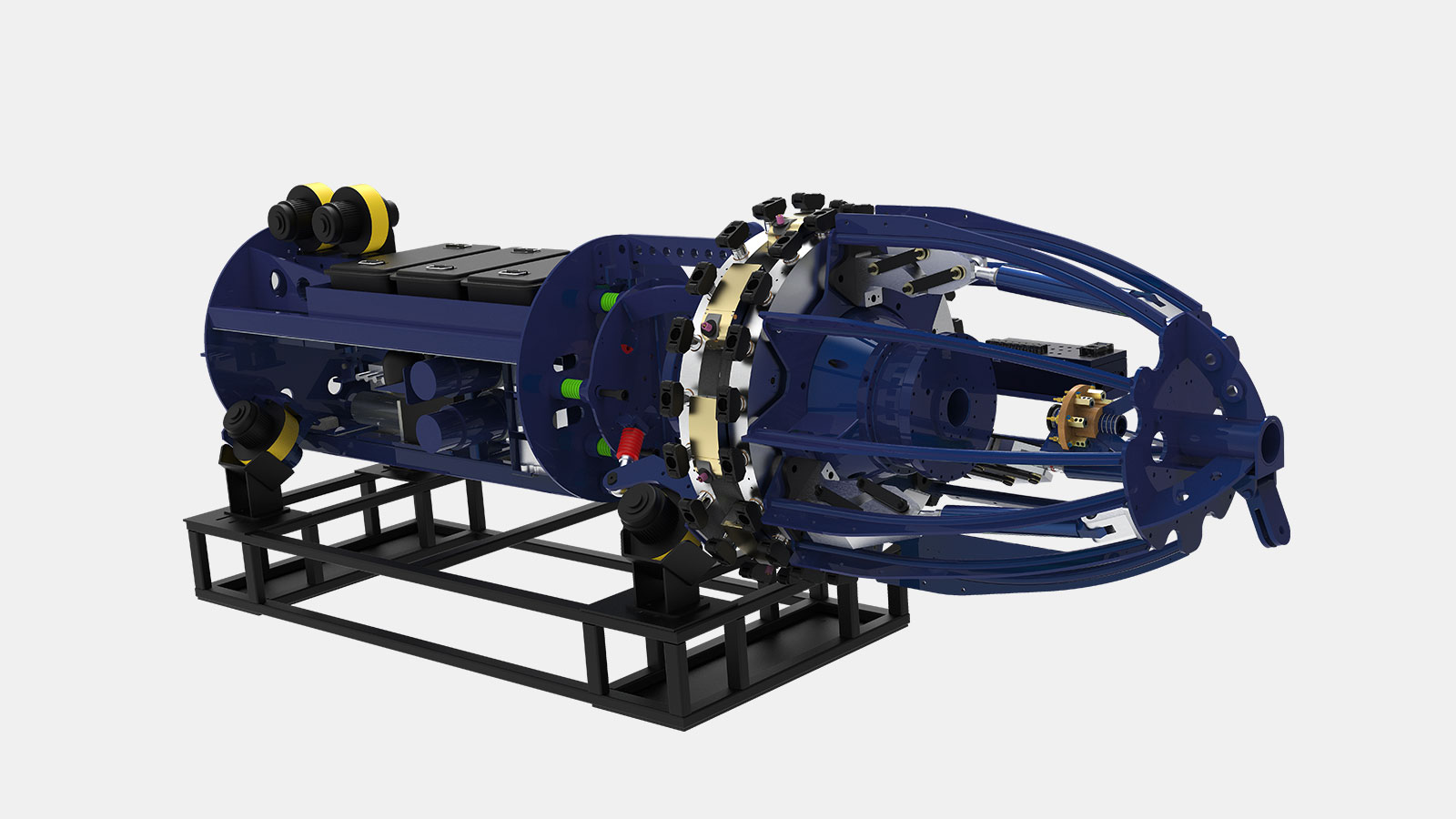
Internal Welding Machine (DW-EH48/56 and DW48/56-8H-D): The Set-Up-Critical Machine
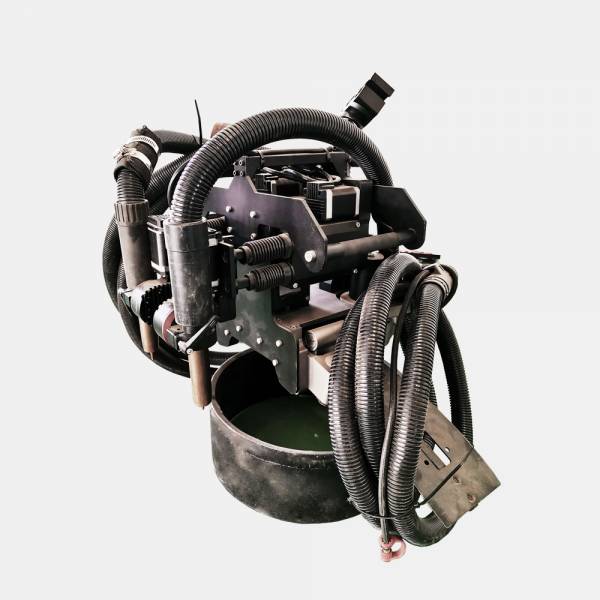
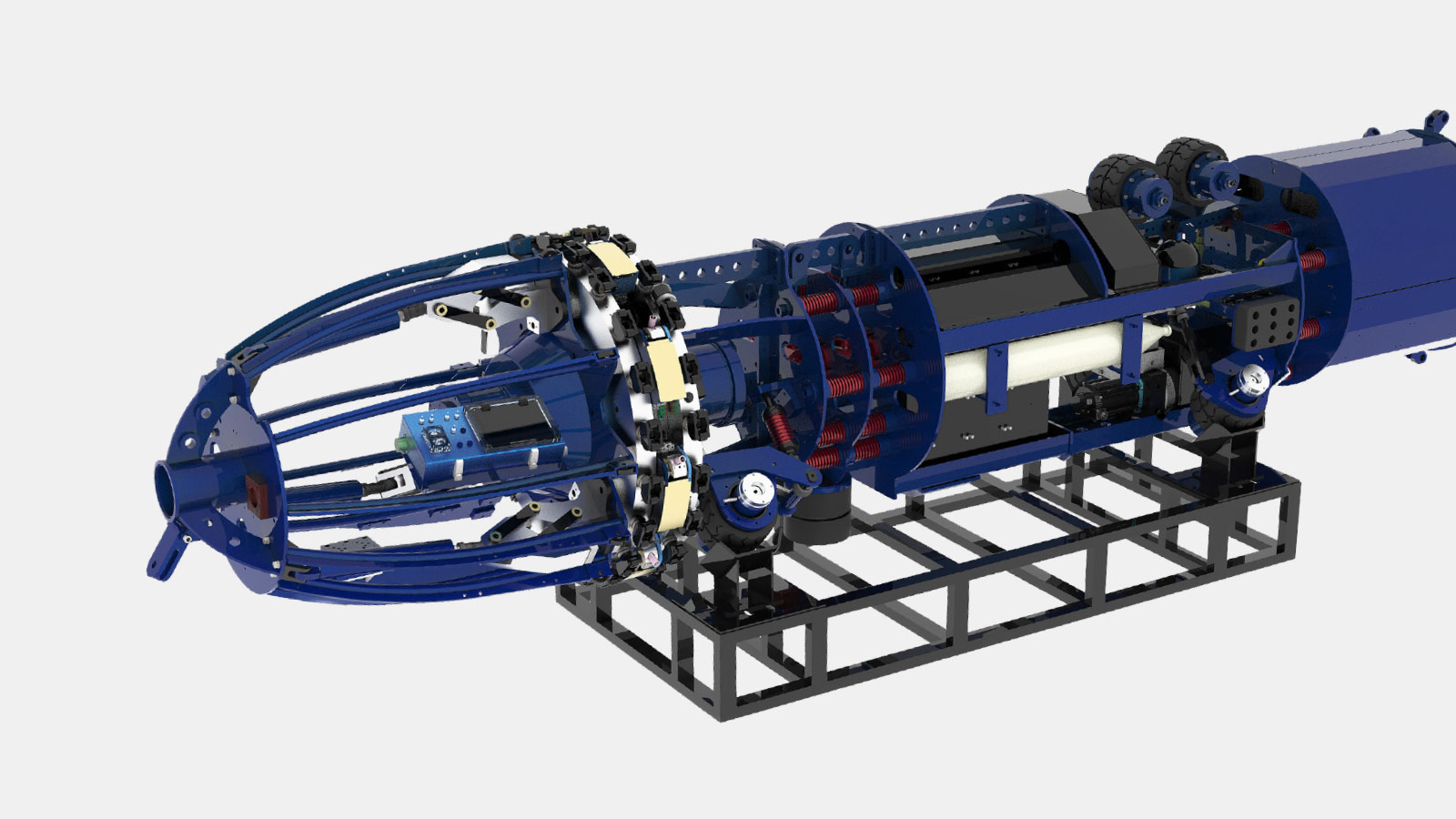
The internal machine is the least forgiving of poor set-up and the most rewarding of good set-up, because it takes fit-up and the root pass off the external crew’s critical path. Eight welding heads work from inside the pipe while hydraulic expansion centring corrects misalignment before the arc starts, and line-up plus root can be completed in about five minutes. The operator’s competency is procedural rather than manual: correct insertion, expansion pressure, centring verification and safe recovery if the machine does not seat. Two models cover different terrain and power situations, and the training has to cover both.
| Parameter | DW-EH48/56 (lithium-battery internal welder) | DW48/56-8H-D (flexible internal welder) |
|---|---|---|
| Power / drive | Electric + hydraulic, lithium battery supply | High-torque servo electric drive, battery pack 230 AH × 3 sets |
| Applicable pipe diameter | Φ1219 – Φ1422 mm | Φ1219 – Φ1422 mm |
| Welding heads | 8 | 8 |
| Travel speed | 0 – 40 m/min | 0 – 60 m/min |
| Welding time | ≤ 90 s per pass | ≤ 120 s per pass |
| Line-up plus root | Root handled by the 8 internal heads | Line-up and root in about 5 minutes |
| Gradeability / bend passage | ≤ 30°; 5D horizontal 90°, 30° vertical | ≤ 30°; 5/6 D curvature |
| Global position accuracy | Hydraulic expansion centring, 5–7 MPa rated pressure | Hydraulic expansion centring, 5–7 MPa rated pressure |
| Altitude and temperature | ≤ 4000 m; −40 to 65 °C; humidity ≤ 90 % | 0 – 3500 m; −50 to 65 °C |
| Weight / machine size | 2950 kg; 5200 × 1200 × 1100 mm | 2400 kg; 4600 × 1250 × 1200 mm |
Automatic TIG: The Root-Pass Craftsman
Automatic TIG is the slowest process per pass and the most demanding to operate well, because acceptance is judged on penetration, root profile and cleanliness rather than deposition rate. The operator must understand root-gap behaviour, backing and purge, arc voltage control and wire feed timing, and must be able to recognise the signs of a root that will fail inspection before the joint is closed. On stainless, alloyed and thin-wall pipe this is the machine that decides whether a spread pays for repairs, so its operator is usually the most experienced person on the crew.
Matching Competency to Machine
The table below maps each machine to the competency it rewards, the error operators most often make on it, and where the training hours should go.
| Machine | Core operator competency | Most common operator error | Training priority |
|---|---|---|---|
| Single-torch external (DW-EW-I) | Programme selection and torch position control | Track not fully seated; torch angle drifting around the circumference | Set-up discipline and programme recall on each diameter |
| Dual-torch external (DW-EW-II) | Synchronisation of two torches; multi-channel process data | Two torches fighting the same pass window; programme not verified before the arc | Parameter management and arc-tracking verification |
| Internal machine (DW-EH48/56 / DW48/56-8H-D) | Procedural set-up and centring verification | Under-expansion, unverified centring, unsafe recovery | Insertion sequence, centring check, emergency procedure |
| Automatic TIG | Root physics, purge and backing control | Root gap left uncorrected; purge lost mid-pass | Root behaviour, purge discipline and in-process judgement |
A Three-Stage Training Curriculum
A curriculum that mixes theory, yard practice and live production in the right proportion compresses the learning curve without exposing the project to it.
| Stage | Setting | Focus | Exit criterion |
|---|---|---|---|
| Stage 1 — Process fundamentals | Classroom / workshop | Cycle anatomy, meaning of each parameter, machine-specific controls, safety, data recording | Passes a written assessment and can explain the effect of each parameter |
| Stage 2 — Off-line practice | Pre-fabrication yard or training station | Track mounting, programme recall, dry runs on scrap joints for each diameter and wall thickness, recovery drills | Produces consistent test joints that pass visual and radiographic criteria under supervision |
| Stage 3 — Supervised live spread | Production spread | Live welding under supervision, escalating to independent operation, parameter tuning inside the qualified envelope | Meets first-pass yield and reject-rate targets over a defined number of joints before sign-off |
What the Operator Actually Owns: the Process Window
Training should leave the operator with a clear mental model of what may be changed and what may not.
- Fixed by the qualified procedure: welding process, consumable, gas, polarity and any essential parameter outside the operator’s authority.
- Adjustable within limits: parameters the procedure permits to be tuned for fit-up variation, all remaining inside the qualified range.
- Never adjustable during a pass: anything that would take the weld outside the qualified envelope mid-pass; the joint must be stopped and re-planned.
- Recorded on every joint: programme number, pipe heat or data, operator identifier and any deviation, so trends can be spotted and traced.
The Most Common Operator-Induced Defects and the Training That Prevents Them
- Lack of fusion at the sidewall — usually a torch angle or oscillation setting error; prevented by a set-up verification drill.
- Undercut and poor cap profile — parameter change around the circumference not correctly recalled; prevented by programme-recall practice on every diameter.
- Porosity — gas flow, torch height or a contaminated consumable; prevented by consumable handling and gas-flow check routines.
- Root defects with the internal machine or TIG — unverified centring, expansion pressure error or purge loss; prevented by procedural checklists and recovery drills.
- Repeat defects at the same clock position — tracked to an uncorrected machine or track fault rather than operator skill; prevented by fault-diagnosis training.
Measuring Competence with Data, Not Opinion
Operators should be certified against measured performance, and the same data that certifies them should keep improving the next intake.
- Arc-on time — the proportion of the shift the arc is actually burning; reveals set-up and organisation losses.
- First-pass yield — the share of joints passing inspection without repair; the single most useful operator metric.
- Reject and cut-out rate by clock position — separates systematic problems from random ones.
- Parameter deviation — how often the recorded programme differs from the qualified one; a leading indicator of risk.
- Ramp-up joints — the number of joints a new operator needs to reach steady-state targets; used to shorten the next intake.
Cold-Weather and Remote-Site Competence
The environmental envelope belongs in the curriculum, not in an afterthought paragraph. The lithium-battery internal machine DW-EH48/56 is rated from −40 to 65 °C with humidity up to 90 %, and the flexible DW48/56-8H-D from −50 to 65 °C, with altitude envelopes of 4000 m and 3500 m respectively. Operators working in those conditions must be trained on battery behaviour at low temperature, condensation and humidity management, wind protection for shielding gas, and the logistics of a spread working far from mains power. Training only on a warm, sheltered station leaves exactly the gap that appears on the first cold night shift.
Conclusion
Automatic welding moves the operator from hand skill to process stewardship, and the machine types place that stewardship in different places: set-up discipline on the single-torch machine, synchronisation and data on the dual-torch machine, procedure and centring on the internal machine, and root physics on automatic TIG. A three-stage curriculum, a clearly bounded process window and data-based certification turn the people who run these machines into the most reliable productivity lever on the spread. Beijing Engine Welder Technology Co., Ltd. (DENOH Group) supplies the full ENGINE WELDER / DENVO automatic welding range and supports operator training, procedure programming and on-site commissioning.
Contact: Beijing Engine Welder Technology Co., Ltd. (DENOH Group) | Tel: 010-86468776 | Email: sales@denohgroup.com | WhatsApp/WeChat: 13521628344