
An automatic welding machine does not weld a joint — it repeats a programme on whatever joint it is handed. That is the whole point of it, and it is also the whole risk. A manual welder absorbs a bad fit-up: he slows the pass, widens the weave, backs off the current. A machine cannot. It applies the same programmed current, the same travel speed and the same oscillation to a gap that is 1 mm wide on one side and 4 mm on the other, and then prints the joint in metal exactly as it found it. Root, hot pass, fill and cap are each a downstream consequence of the thirty minutes of pipe-end preparation and fit-up that came before. This guide covers that upstream step — bevel geometry, pipe-end preparation, alignment, measurement — and how the four machines in the ENGINE WELDER / DENVO pipeline automatic welding range actually deal with the joint they are given.
Why Automatic Welding Punishes Poor Fit-Up More Than Manual Welding
Automatic welding removes the operator’s variability. That is its value and that is its exposure. Because the arc is governed by a stored programme rather than by a hand and an eye, the machine has no way to compensate for a joint that varies from the one the programme was written for. The result is not a random scatter of small imperfections; it is a systematic defect reproduced on every joint that shares the same fit-up error. Three failure modes show up again and again:
- Root burn-through. A root gap wider than the procedure assumes lets the programmed current punch through the root before the pool can bridge it. The defect is not subtle and it is rarely repairable in place.
- Lack of root fusion. A gap tighter than specified, or a root face that is too thick, means the arc never reaches the joint line. The joint looks sound and fails on radiography.
- Offset and hi-lo. Internal misalignment moves the root line off the torch axis, so one side receives the heat the other side needed. This is the classic root-pass defect on large-diameter pipe, and it is the one the internal machines are designed to remove.
The cost arithmetic is lopsided. A rejectable root found by radiography is not one weld reworked; it is a cut-out, a re-bevel, a re-fit, a re-weld and a second inspection — on a joint that has already consumed a clamp, a machine and a crew. Fit-up is the cheapest half-hour on the spread and the most expensive one to skip.
The Pipe-End Specification: Bevel Geometry and Preparation
Every project works to its own welding procedure specification, and the numbers below are typical ranges rather than a substitute for the WPS. What matters is that they are measured rather than assumed, because each one maps directly onto a defect the machine will otherwise reproduce.
| Feature | Typical value | Why it matters to an automatic weld | How to verify |
|---|---|---|---|
| Bevel angle (per side) | 30° to 37.5° | Sets groove volume and torch access; too narrow starves the root, too wide wastes wire and distorts the pipe | Bevel protractor, every joint |
| Root face (land) | 1.5–2.5 mm | Supports the root pool; a heavy land causes lack of fusion, a feather edge causes burn-through | Feeler or bridge-cam gauge |
| Root gap | 2–3 mm | Governs penetration; the single most common cause of rejectable automatic root passes | Root-gap gauge at four points |
| Hi-lo (internal misalignment) | ≤1.5–2 mm, usually ≤10% of wall | Offsets the root line from the torch axis and produces one-sided root fusion | Hi-lo / bridge-cam gauge |
| Wall thickness | 10–35 mm | The rated range of the DW-EH48/56 lithium internal welder; sets pass count | Ultrasonic or calliper at the bevel |
| Pipe-end cleanliness | 25 mm swathe, dry and bright | Mill scale, rust, oil and moisture are the direct source of root porosity | Visual and wipe before fit-up |
| Ovality and roundness | Within the track and clamp range | An out-of-round pipe will not seat the ring track or centre the expansion shoes | Tape measure across four diameters |
How the Four Machines Deal With the Joint They Are Given
It is a mistake to assume that automatic machines compensate for fit-up. What they do is hold a precise path and a precise position — which is why they demand a consistent joint in the first place. The internal machines correct alignment through the expansion system; the external machines hold the torch on track and correct the seam position, but they cannot fill a gap that should not be there.
| Machine | Fit-up related capability | What it actually corrects | What it cannot correct |
|---|---|---|---|
| External — single torch (DW-EW-I) | Perforated steel track and split ring track on the pipe OD; gear-rack carriage; torch adjustable vertically and horizontally to centre on the pool | Torch position against the prepared bevel; parameters change automatically around the circumference | An irregular root gap or a pipe that is out of round |
| External — dual torch (DW-EW-II) | Arc auto-tracking follows the seam and corrects deviation in real time; two torches with commonised consumables; multi-channel process data storage | Lateral seam drift and bead wander during the pass | Root gap outside the procedure window; hi-lo |
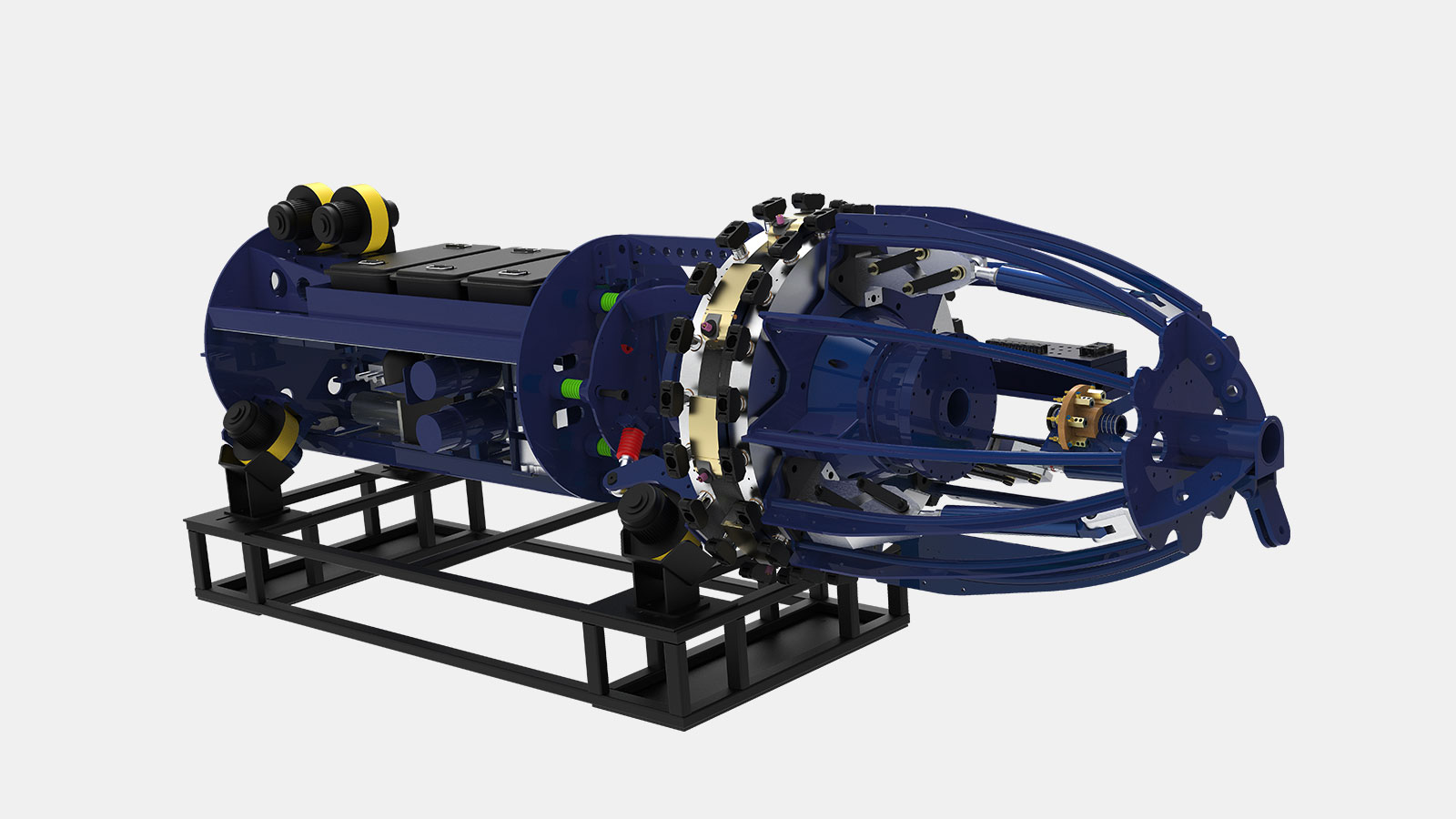
| Internal — lithium (DW-EH48/56) | Electric plus hydraulic drive, eight welding units, hydraulic expansion rated 5–7 MPa; wall 10–35 mm, altitude ≤4,000 m, −40 °C to 65 °C | Centres the pipe and corrects internal misalignment (hi-lo) before the root is laid | A bevel that has been cut wrong, or a root gap set by hand on the outside |
| Internal — flexible (DW48/56-8H-D) | Servo drive on a 230 AH×3 battery group at DC24 V; hydraulic expansion 5–7 MPa; fast-response electromagnetic brake; fit-up and root pass in about five minutes | Alignment and hi-lo on large-diameter pipe, including through 5/6D bends and 30° grades | Wall thickness outside the internal welder’s rating, or a clamp that is not seated |
| Automatic TIG (root set) | Independent torch head with its own travel and wire feed | Repeatable root geometry once the joint is presented correctly | Any variation in root gap or hi-lo, to which TIG root passes are especially sensitive |
The expansion system is the fit-up tool
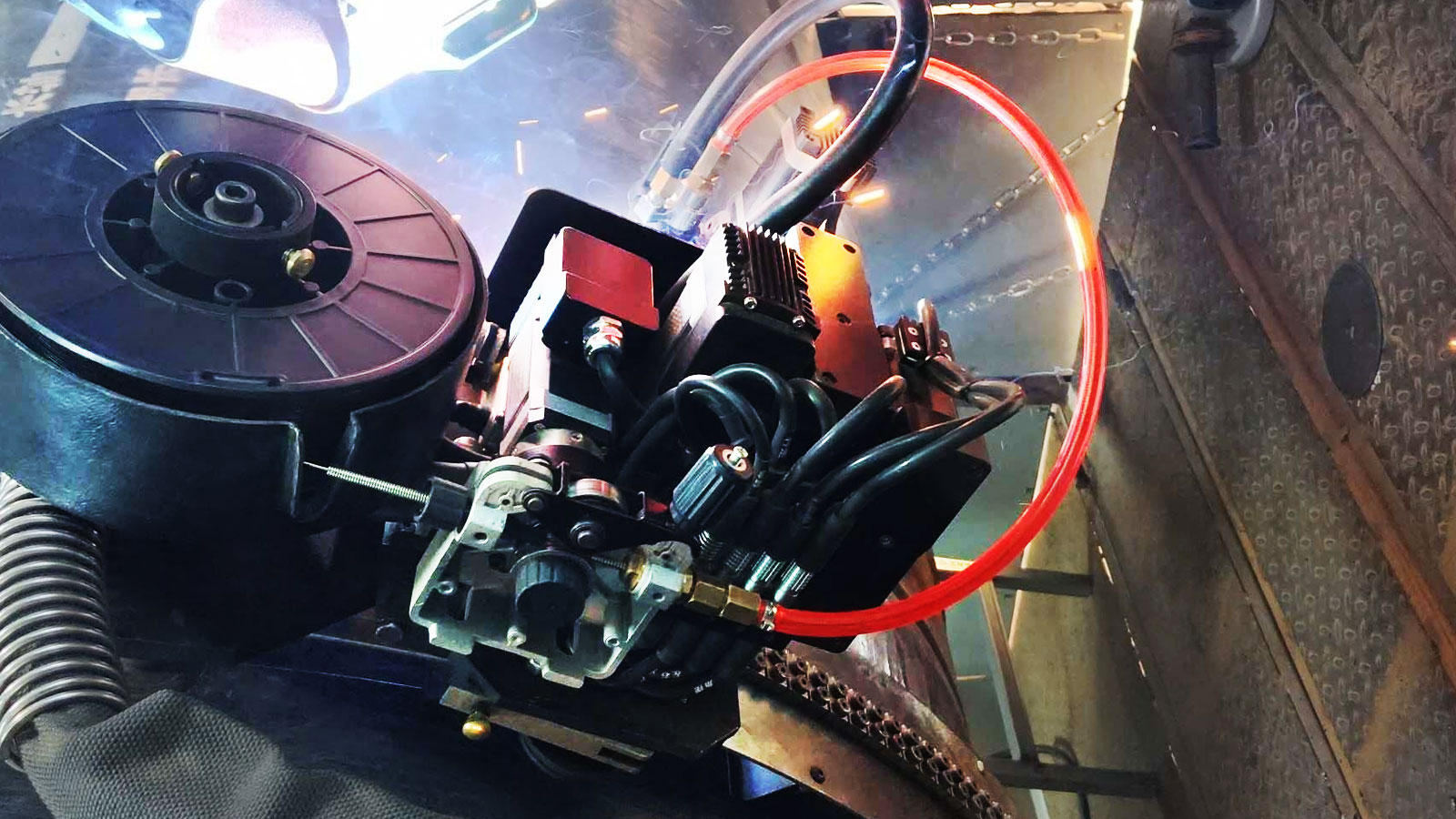
On both internal machines, the hydraulic expansion system at a rated 5–7 MPa is doing double duty: it clamps the machine in the pipe, and it centres the pipe and corrects internal misalignment before the root is welded. That is the reason an internal welder can hold a root on a large-diameter joint that a manual welder would fight on hi-lo alone. It is also the reason a clamp pressure that has drifted matters: the machine will still weld, but the root gap it leaves behind will tell the story long before a gauge does. Verify the pressure against the specification, not by feel.
The rail is the external machine’s fit-up tool
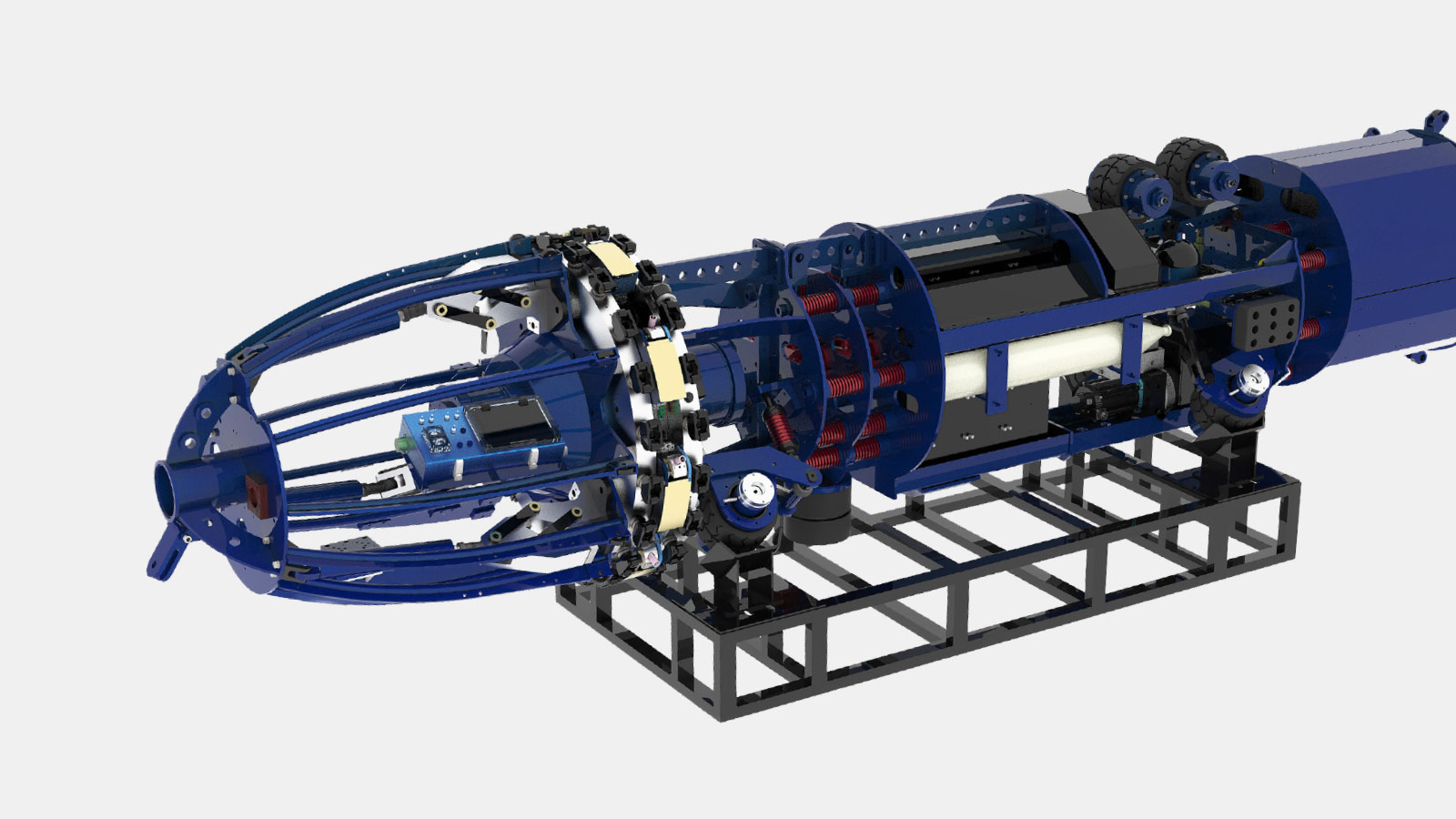
On the external side, the perforated steel track and the split ring rail are what translate a good joint into a repeatable pass. The track is stiff and light and quick to fit, the gear-rack carriage has no lost motion, and the torch is adjustable vertically and horizontally so the bead can be centred on the pool. None of that helps if the rail is not seated. Slack clamp jaws and worn rack segments show up as undercut, as wandering beads and as one-sided fusion — defects that look like a welding problem and are actually a fit-up problem.
The Fit-Up Workflow Before the Root Pass
- Confirm the pipe-end preparation. Bevel cut, root face, and a clean, dry 25 mm swathe either side of the joint. No mill scale, no rust, no oil, no water.
- Present the joint. Insert the internal welder, or set the external line-up clamp, and bring the two ends together without forcing them.
- Centre the pipe. Apply the hydraulic expansion (rated 5–7 MPa) or close the external clamp until the pipe ends are concentric.
- Measure the root gap at four points — top, bottom and both sides. Record the numbers; do not accept a single reading as the joint.
- Measure hi-lo with a bridge-cam gauge. If it exceeds the specification, re-centre before welding rather than plan a repair after.
- Seat and check the external track where an external machine will follow: rail square to the joint, carriage running true, clamp jaws tight.
- Preheat where the procedure calls for it, and verify the temperature rather than assuming it.
- Call up the correct stored programme on the touch screen or HMI, and confirm the wall thickness and position match the joint in front of the machine.
- Release to the root pass, and record the fit-up figures alongside the joint number, so that a later reject can be traced back to the joint as it was set.
Fit-Up Defect to Root Defect: A Read-Across Table
Most rejectable root defects on an automatic line can be predicted from the fit-up sheet. This table is the one worth pinning up in the fit-up tent.
| Defect seen on the joint | Fit-up cause | Prevention at fit-up | Machine family |
|---|---|---|---|
| Root burn-through, excessive penetration | Root gap wider than the procedure assumes | Measure the gap at four points; correct before welding | All |
| Incomplete root fusion | Gap too tight, or root face too heavy | Hold land 1.5–2.5 mm and gap 2–3 mm to the WPS | All |
| One-sided root fusion, offset root line | Hi-lo beyond the specification | Centre hydraulically and correct internal misalignment | Internal welders |
| Root porosity, wormholes | Scale, rust, oil or moisture on the bevel; disturbed gas shield | Clean and dry the 25 mm swathe; shield from wind | All |
| Undercut or wandering bead | Rail not seated, slack clamp jaws, worn rack segment | Re-seat the rail; re-check the clamp and rack | External welders |
| Uneven root geometry round the circumference | Out-of-round pipe or a clamp that is not concentric | Check ovality across four diameters; re-set the clamp | External welders |
The Gauges and Checks That Pay for Themselves
- A root-gap gauge — the cheapest instrument on the spread and the one that prevents the most expensive defect.
- A hi-lo / bridge-cam gauge — reads both internal misalignment and cap height against the bevel.
- A bevel protractor — confirms the groove angle the procedure was written for.
- The hydraulic pressure gauge — verify the expansion system against its 5–7 MPa rating instead of judging it by feel.
- A tape or calliper — four diameters to catch out-of-round pipe before the track is fitted.
- A moisture check on the bevel — on a cold morning, the swathe is dry only if somebody checked.
The Productivity Case: Fit-Up Time Buys Back Rework Time
Fit-up is often the first thing sacrificed when the spread is behind, and it is the worst thing to sacrifice. Take a pipeline welding 120 joints a month and a repair rate of 5%: that is six joints to cut out, re-bevel, re-fit, re-weld and re-inspect, each of which consumes the machine, the clamp and the crew all over again. Pull the repair rate to 1% and the same spread recovers most of a working day every month — from the cheapest half-hour on site. On the flexible internal welder, fit-up and root pass together take about five minutes; there is no version of that arithmetic in which careful preparation is the slow option.
Site Checklist Before the Root Pass
- Bevel angle, root face and root gap measured and within the WPS.
- Hi-lo measured and within the specification.
- 25 mm swathe clean, dry and bright on both pipe ends.
- Hydraulic expansion pressure verified against 5–7 MPa, not estimated.
- External rail square, seated and clamped; carriage running true.
- Correct programme called up on the touch screen or HMI; wall thickness and position confirmed.
- Preheat applied and measured where the procedure requires it.
- Fit-up figures recorded against the joint number for traceability.
Frequently Asked Questions
Does an automatic machine need a better fit-up than a manual welder?
Yes, and in a specific sense. A manual welder can vary current, speed and technique to follow a joint that is not uniform. An automatic machine repeats a programme, so it can only be as good as the joint it is given. Tighter control of bevel, gap and hi-lo is the price of the repeatability the machine delivers.
Which machine should correct the misalignment?
On large-diameter pipe, the internal welder. Both internal machines use a hydraulic expansion system rated 5–7 MPa that centres the pipe and corrects internal misalignment before the root is laid. Where welding is done from the outside only, alignment must be corrected by an external line-up clamp before the external machine takes over.
How does this apply to the automatic TIG root pass?
More strictly than to any other process. A TIG root pass with a programmed arc and a fixed wire feed has very little tolerance for a varying root gap, so the fit-up window is tighter and the measurement discipline matters more. TIG gives the cleanest root on a well-prepared joint and the least forgiving result on a poor one.
What wall thickness can the internal welders handle?
The DW-EH48/56 lithium internal welder is rated for wall thickness 10–35 mm, which covers the large-diameter transmission work these machines are built for. Fit-up quality becomes more, not less, critical as the wall thickens, because the root absorbs the misalignment before the fill passes can hide it.
None of this is new engineering; it is the difference between owning four automatic welding machines and running an automatic welding line. Measure the bevel, control the gap, centre the pipe, and the machines do the rest. Explore the full ENGINE WELDER / DENVO pipeline automatic welding range and match the fit-up and welding tools to the pipe you actually lay.
Beijing Engine Welder Technology Co., Ltd. (DENOH Group)
Tel: 010-86468776
Email: sales@denohgroup.com
WhatsApp / WeChat: 13521628344
Website: www.denohgroup.com/contact/