

Automatic pipeline welding takes most of the welder’s hand off the joint, but it does not remove variability — it relocates it. Once the carriage executes the pass, joint quality depends on whether the approved procedure is actually the procedure being run: the right parameter set loaded on the right machine, the right wire, the right gas, the right rail seating, the right expansion pressure, the right preheat. A welding procedure discipline audit is the cheapest defect-prevention tool on a spread, and on automatic equipment it is also the easiest to run, because the machines record what they did. This guide sets out what to audit across a single-torch external welder (DW-EW-I), a dual-torch external welder (DW-EW-II), the internal root machines (DW-EH48/56 lithium and DW48/56-8H-D flexible) and automatic TIG — and how to close findings so that they stay closed.
Why Discipline, Not Skill, Is the Remaining Variable
A competent manual welder absorbs small deviations in real time: the puddle changes, and the hand responds. An automatic carriage does not. It repeats exactly what the operator configured — including a stale parameter set, a torch angle half a degree away from the qualified value, or a shielding gas bottle that was swapped without repeating the purge. The practical consequence is that on an automatic spread most defects do not originate in the arc; they originate in a decision taken before the arc started.
- The audit verifies conformance to the qualified procedure, not the capability of the machine.
- It looks at evidence produced during the shift, not at paperwork completed after the fact.
- It checks the parts of the process a machine cannot correct by itself: geometry, consumables, gas, preheat and parameter version.
- Its output is a small number of classified findings with named owners and dated closure — not a score.
The Five Audit Domains
Every discipline audit on a pipeline spread can be organised into five domains. Keeping the domains fixed makes audits comparable from week to week and from spread to spread, which is what turns findings into trends.
| Domain | What proves compliance | Typical evidence | Owner |
|---|---|---|---|
| Personnel | Operator qualified for that machine class; current WPS briefing signed | Certificate register, briefing sheet | Welding engineer |
| Machine | Geometry and setup equal to the qualified procedure: rail seating, torch position, tracking response, expansion pressure within 5-7 MPa | Shift readiness sheet, touch-screen setup page | Crew leader |
| Material | Heat number matches the WPS; wire diameter 0.9-1.2 mm; gas grade and flow; copper backing condition | Material certificates, gas bottle log, backing inspection | Store plus QC |
| Method | The WPS/PQR revision loaded on the machine is the revision approved for that joint | Profile version on the touch screen, exported parameter file | Welding engineer |
| Environment | Preheat measured, not assumed; ambient temperature and humidity inside the machine rating (internal machines rated to 90% RH); wind protection in place | Preheat record, weather sheet | QC |
What Discipline Means for Each Machine Type
The four machine families fail audits in different places, so the audit script has to change with the machine on the joint.
| Machine | Discipline focus | Where the evidence lives |
|---|---|---|
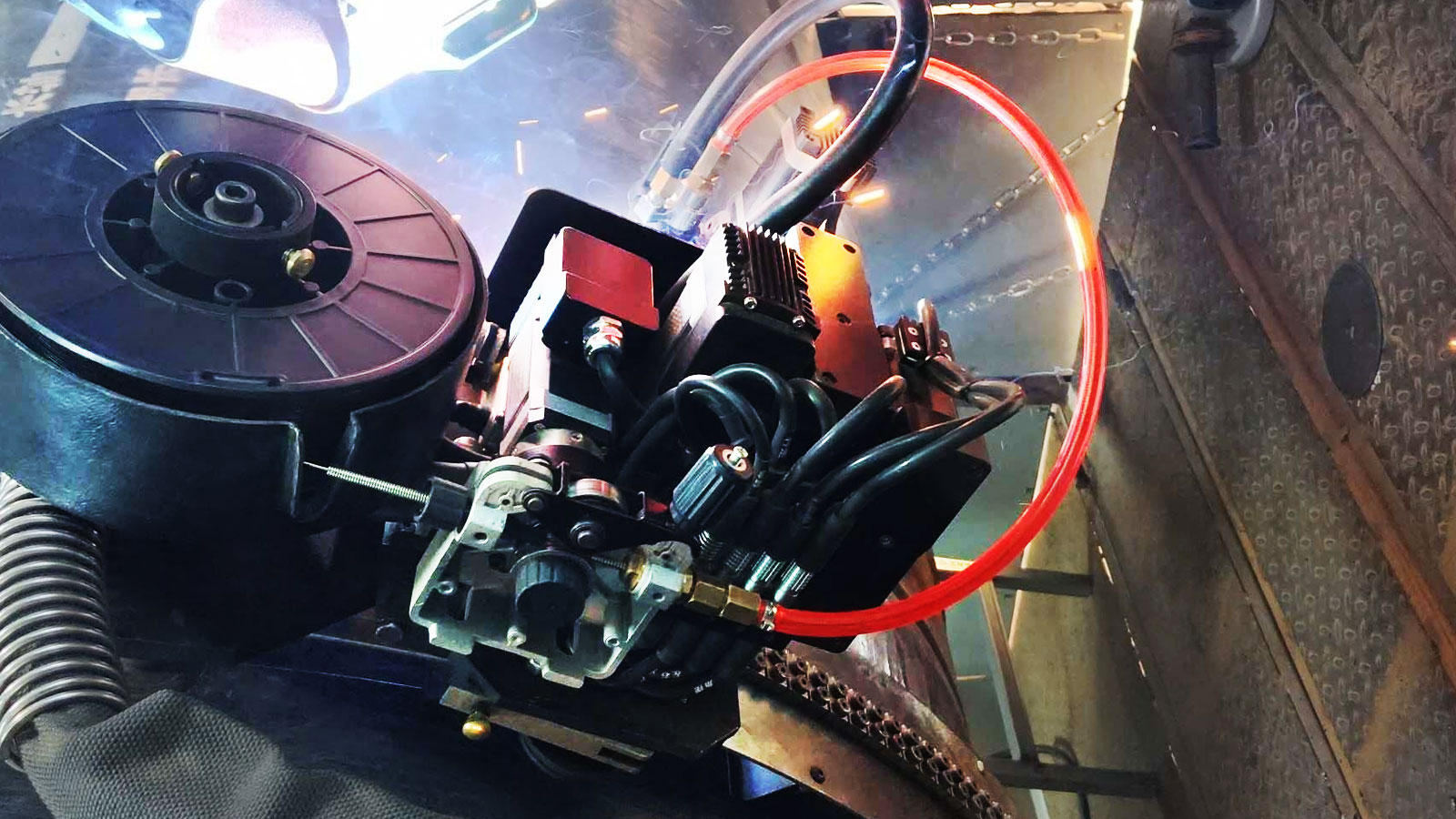
| DW-EW-I single torch | Toothed-hole steel rail fully seated with the rack engaged; multi-axis torch position equal to the qualified value; the position-dependent parameter programme active over the whole circumference | Touch-screen parameter store with upload and download |
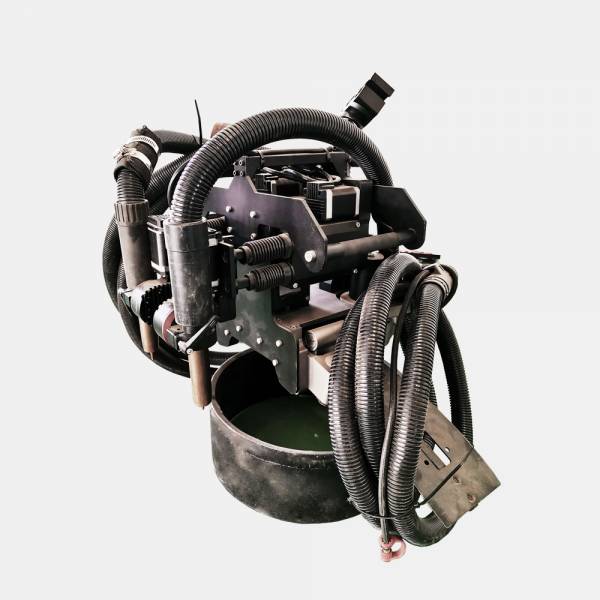
| DW-EW-II dual torch | Both torches verified independently; straight or angular oscillation mode matching the WPS; arc tracking genuinely correcting, not merely switched on | Multi-channel process data recording |
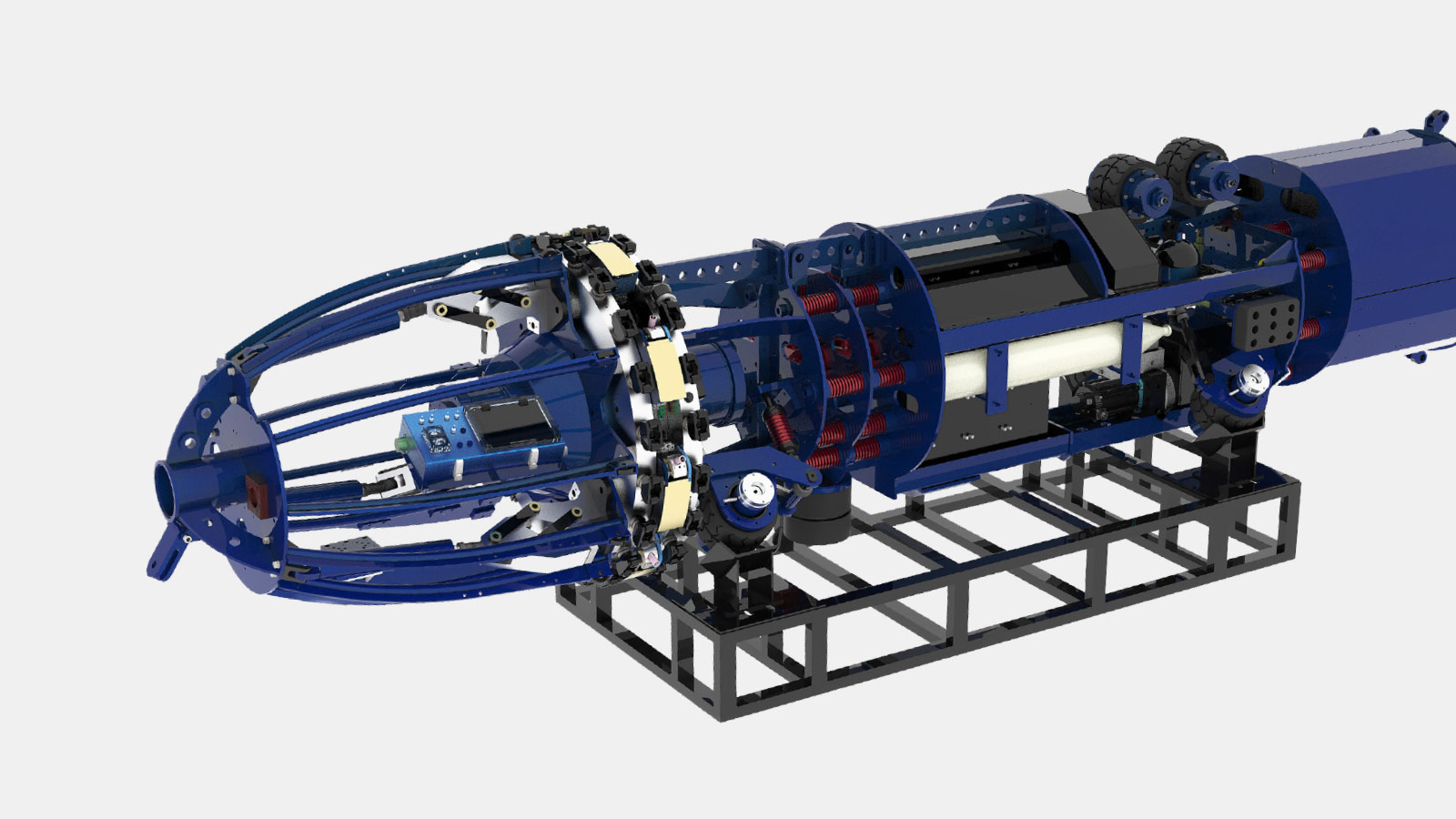
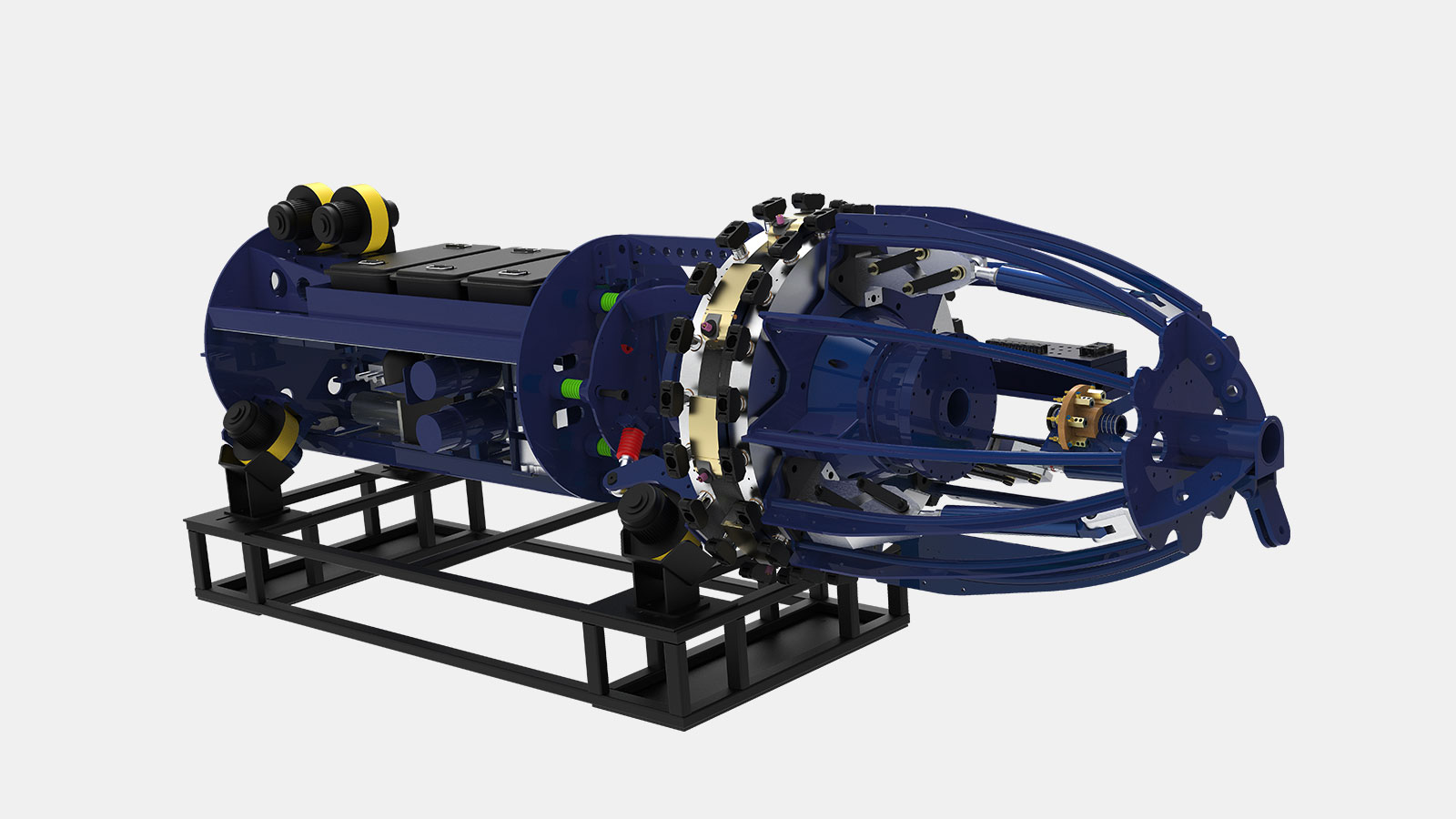
| DW-EH48/56 lithium internal | All eight units firing; expansion pressure inside 5-7 MPa; 30 L gas bottle weighed per shift; battery state checked before the root | Pressure and gas log, weld time at or below 90 s |
| DW48/56-8H-D flexible | Fit-up and root completed in about five minutes without shortening the clamping sequence; 230 Ah x 3 battery charged; slopes to 30 degrees and 5/6D bends do not disturb travel | Battery state, travel log, weld time at or below 120 s |
| Automatic TIG | Audited against the WPS only: purge, preheat, wire feed, travel speed. No separate product datasheet is published for this machine | WPS and PQR, procedure qualification trial records |
The Rail Is the Most Audited Item on the Single-Torch Machine
Because the DW-EW-I changes welding parameters automatically with clock position, the rail is not merely a guide — it is the position reference for the entire procedure. A rail that is seated on debris, or a rack that is only partly engaged after a line move, shifts that reference, and every subsequent parameter is then applied at the wrong point on the circumference. Audit pin engagement and rail-to-pipe contact before the first joint of every shift, and again after every move.
Two Arcs Mean Two Independent Verifications on the Dual-Torch Machine
The DW-EW-II deposits with two torches in straight or angular oscillation mode, with arc tracking and multi-channel data recording. Consumable commonality between the two torches and between machines simplifies stores, but it also makes it easy to assume that one verification covers both. Check torch angle and oscillation mode separately, and confirm from the recorded data that tracking produced a correction, not just that the function was enabled.
Audit Cadence: From Shift Start to Quarterly Review
| Interval | What is audited | Sample size |
|---|---|---|
| Shift start | Machine readiness: rail, torch, gas, battery, expansion pressure | Every machine |
| First joint after any change | Parameter profile against the qualified window (WPS revision, wire, gas) | Every profile change |
| Daily | Exported process data against the qualified window | One in twenty joints, plus every suspect joint |
| Weekly | Consumable reconciliation: wire, gas and nozzles issued against joints completed | Whole spread |
| Monthly | Procedure audit: WPS and PQR revision, calibration status, operator register | All stations |
| Quarterly | Findings trend review and effectiveness of corrective actions | Programme level |
The weekly consumption reconciliation deserves emphasis. Substitution of wire grade, gas mixture or contact tips rarely appears in any document; it appears as a gap between what was issued and what the joint count implies. It is the single most productive audit on most spreads, and it costs an hour.
Classifying Findings and Closing Them
| Class | Examples | Required action | Closure evidence |
|---|---|---|---|
| A – hold | Parameter outside the WPS window; unqualified operator; wrong wire or gas | Stop the station and quarantine joints welded since the last good check | Re-audit plus NDT of the quarantined joints |
| B – correct within 24 h | Marginal rail seating; drifting gas flow; tracking offset after a move | Correct before the next shift starts | Crew leader sign-off with a photograph |
| C – observation | Missing label; undocumented battery swap; stale printout on the board | Correct within the week | Updated record presented at the next audit |
A finding is closed by evidence, not by statement. Repeat class A findings need a five-why analysis, because the second occurrence usually means the first corrective action addressed the symptom rather than the cause — typically a parameter library that nobody owns, or a shift handover that has no room for the check.
Eight Findings That Recur on Automatic Spreads
- A WPS revision is issued but the touch-screen profile library is never updated, so two stations weld to different revisions on the same day.
- A gas bottle is swapped at the wrong moment: flow is restored, but the purge time is not repeated before the next root.
- The rail is re-seated after a line move without checking pin engagement, so position-dependent parameters land on the wrong clock position.
- Expansion pressure is set by feel rather than inside the 5-7 MPa band, so fit-up correction varies from joint to joint.
- Battery state is not checked before a root, and the 230 Ah x 3 pack on the flexible machine sags part-way through a long pass.
- Arc tracking is left enabled but never verified after a bevel change, so the torch follows the wrong seam edge with great precision.
- A subcontractor crew uploads its own parameter set because that is faster than requesting the approved one.
- A consumable substitution never appears in any document and is detectable only by reconciling material issued against joints completed.
Digital Evidence Turns the Audit Into a Query
The economics of auditing change completely when the machine already records the process. Instead of standing behind the operator with a clipboard, the auditor exports the shift and compares it with the qualified window. Three steps make this routine:
- Freeze an approved profile library per WPS revision, with a version number that appears on the touch screen and in the export.
- Export process data per shift per station — multi-channel recording on the dual-torch machine, parameter store on the single-torch machine.
- Sample the export against the window, and log every exception with its joint number so that the finding points at physical pipe, not at a general impression.
This is also how a dispute is settled later: the joint number, the profile version and the recorded parameters are the record, and they exist whether or not the paperwork was completed on time.
Running a Ninety-Minute Discipline Audit on Site
- Ten minutes: walk the spread and note what is physically on each machine before anyone has a chance to tidy up.
- Fifteen minutes: compare loaded profile versions against the approved register for the joints being welded today.
- Fifteen minutes: check rail seating, torch position, expansion pressure and battery state on one machine of each type.
- Fifteen minutes: pull the previous shift export and sample it against the qualified window.
- Ten minutes: reconcile wire, gas and nozzles issued against joints completed since the last audit.
- Fifteen minutes: review open findings from the previous audit and ask for closure evidence, not status words.
- Ten minutes: classify the new findings, assign owners and dates, and write them where the next shift will see them.
Ten-Point Audit Checklist
- Is the WPS revision on the machine the revision approved for today’s joints?
- Is the approved profile library versioned and visible on the touch screen?
- Is the rail fully seated, pins engaged, rack clean, on the single-torch machine?
- Is torch position equal to the qualified value on every external machine, measured rather than assumed?
- Are both torches and the oscillation mode verified independently on the dual-torch machine?
- Is expansion pressure logged inside 5-7 MPa for every internal-machine root?
- Is the 30 L shielding gas bottle weighed, and is purge time repeated after every swap?
- Is the battery above the agreed threshold before each root on the flexible machine?
- Do wire grade, diameter (0.9-1.2 mm) and gas match the WPS, and does consumption reconcile with joint count?
- Is preheat measured and recorded against ambient temperature, with wind protection in place?
Frequently Asked Questions
How is a discipline audit different from a weld inspection?
Inspection judges the joint after it is made. The audit judges the conditions under which it was made, before and during welding. They are complementary: inspection finds the defect, the audit explains why it appeared and whether it will appear again tomorrow.
How often should the audit be repeated?
Shift-start readiness checks daily, data sampling daily, consumable reconciliation weekly, and a full procedure audit monthly. The cadence matters less than the consistency: an audit that happens every second week at a fixed time beats an intensive campaign that happens once after a rejection.
Who should own the audit?
The welding engineer owns the method and the parameter library; the crew leader owns machine readiness; QC owns the environment record. A single auditor who signs everything tends to audit what is easy to see, which is paperwork, not the process.
Can the same model be applied to automatic TIG?
Yes, but entirely against the WPS, because automatic TIG is not published with a standalone datasheet on this site. Audit purge, preheat, wire feed and travel speed against the qualified procedure, and treat any parameter that is not written in the WPS as an unverified variable.
Conclusion
On an automatic pipeline spread, the machine is the most consistent welder on site and also the most literal one. Procedure discipline is what keeps that literalness pointed at the qualified joint: the right profile loaded, the rail seated, the pressure inside 5-7 MPa, the gas bottle weighed, the battery above threshold, the export sampled and every exception logged. Audited on a fixed cadence and closed with evidence, it costs a few hours a week and removes the category of defect that no amount of operator skill can prevent.
Beijing Engine Welder Technology Co., Ltd. (DENOH Group)
Tel: 010-86468776 | Email: sales@denohgroup.com
WhatsApp/WeChat: 13521628344 | Visit /contact/ for a procedure discipline audit template matched to your spread.