Every pipeline bid is won or lost on a single number: the cost per joint. The travel speed printed on a datasheet tells you very little about it, because a girth weld is a sequence — line-up, root, hot pass, fill, cap, inspection — and whichever step is slowest or least reliable sets the pace for the whole spread. This article breaks that sequence into its serial steps, shows which of the four automatic machine types compresses which step, and works through the arithmetic that turns cycle time into joints per day and cost per joint. Configuration examples are drawn from the ENGINE WELDER / DENVO pipeline automatic welding machine series.
Why the Slowest Step, Not the Fastest Machine, Sets Your Output
Automatic welding is a chain of operations performed in series at one station. If the internal machine finishes a root in ninety seconds but the crew still needs twelve minutes to line up and clamp the next joint, doubling the root-pass speed changes almost nothing about daily output. Productivity planning therefore has to start by measuring each step on its own, and then ask what a given machine actually removes from the critical path — not what it can do in a demonstration.
The Girth Weld Cycle, Decomposed
The table below separates a field girth weld into its serial steps, names the physical limit of each, and identifies the equipment that can compress it.
| Cycle step | What sets the pace | Machine that compresses it | Effect on the critical path |
|---|---|---|---|
| Line-up, fit-up and clamping | Pipe handling, hi-lo correction, clamping time | Internal welding machine with hydraulic expansion centering | Turns fit-up from a manual hammer-and-wedge job into a centering operation performed inside the pipe |
| Root pass | Arc stability at the 6 o’clock position and burn-through risk | Internal welding machine (8 welding heads) or automatic TIG | Removes dependence on welder reflex at the hardest clock position |
| Hot pass and fill | Number of passes, oscillation mode, carriage travel stability | Dual-torch external welder with arc tracking | Two torches deposit fill metal inside the same pass window |
| Cap pass | Bead profile, undercut control, parameter behaviour around the circumference | Single- or dual-torch external welder with position-based parameter change | Programmed parameters replace manual pool control |
| Inspection and repair | Rejection rate at non-destructive testing | All of the above, through repeatability | Every avoided cut-out removes a complete re-weld from the critical path |
Machine-by-Machine Productivity Role
Each machine in the family contributes differently. The point of a configuration exercise is to make those contributions overlap instead of duplicate.
Single-Torch External Welder (DW-EW-I)
The single-torch external welder is the reference machine of the range: a perforated steel track, a lightweight dust-resistant carriage, single rack-and-pinion drive and one multi-axis adjustable torch. Its productivity argument is simplicity rather than raw speed. Set-up and dismantling are quick, the split ring track adapts to different diameters, and welding parameters change automatically with position around the circumference, so one operator can run a consistent all-position weld. Where the joint count per spread is moderate, where a pre-fabrication yard shares the same machine, or where diameters from Φ219 to Φ1422 mm change frequently, the single-torch machine often returns the lowest cost per joint precisely because it spends the least time waiting.
Dual-Torch External Welder (DW-EW-II)
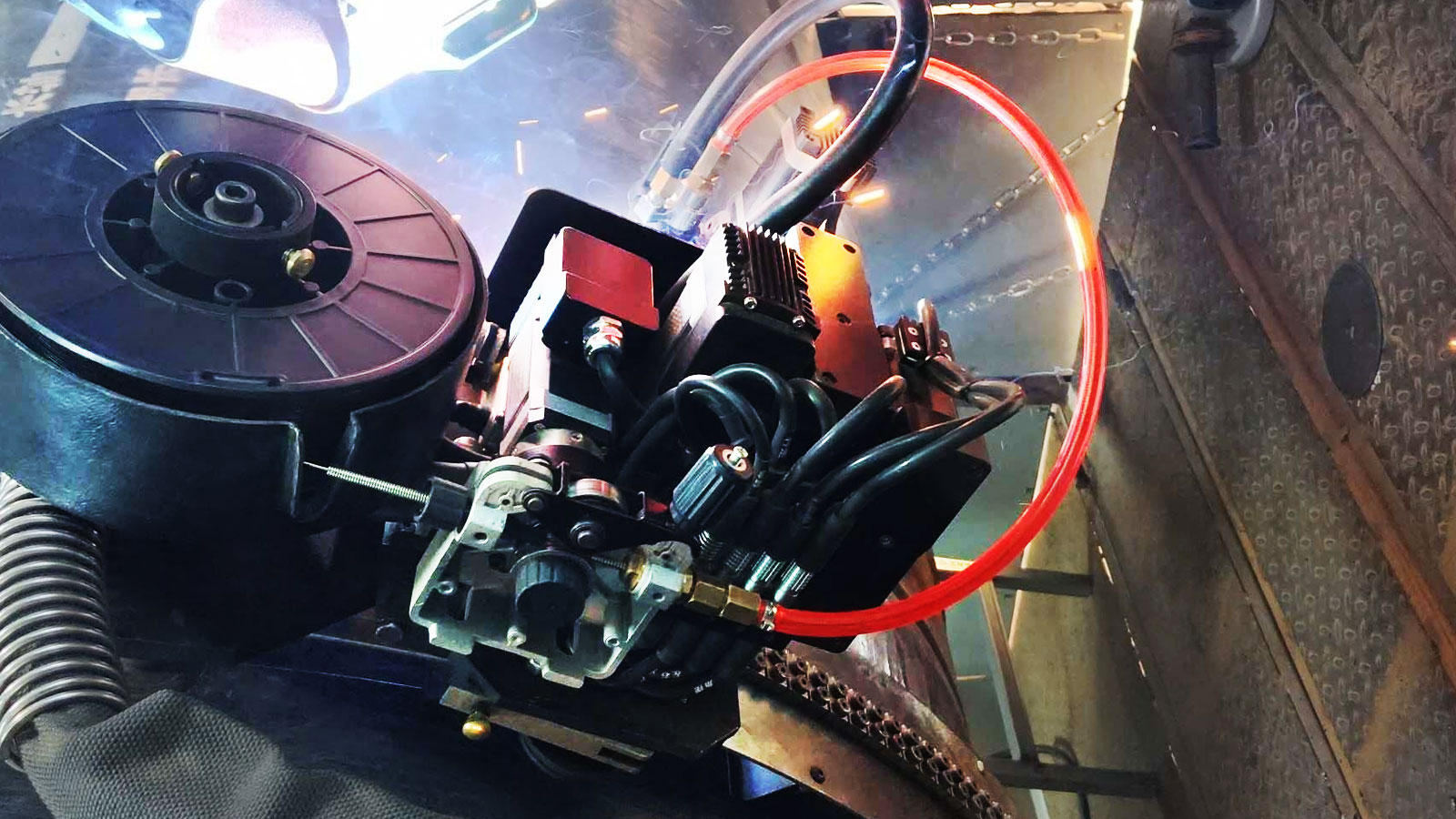
The dual-torch external welder exists to cut passes, not to cut quality. Two torches work the same joint inside the same pass window, with straight or angular oscillation modes selectable to suit the procedure; an arc tracking system follows the groove in real time and corrects deviation, and the welding machine and control cabinet communicate digitally for precise, fast response. On high-grade long-distance pipelines, national energy projects and high-specification pre-fabrication yards, two torches remove one or more fill passes from the cycle — exactly the kind of change that shortens the critical path. Multi-channel storage, recall, import and export of process data shortens changeover between pipe grades and wall thicknesses too, because a validated program is recalled instead of rediscovered on the joint.
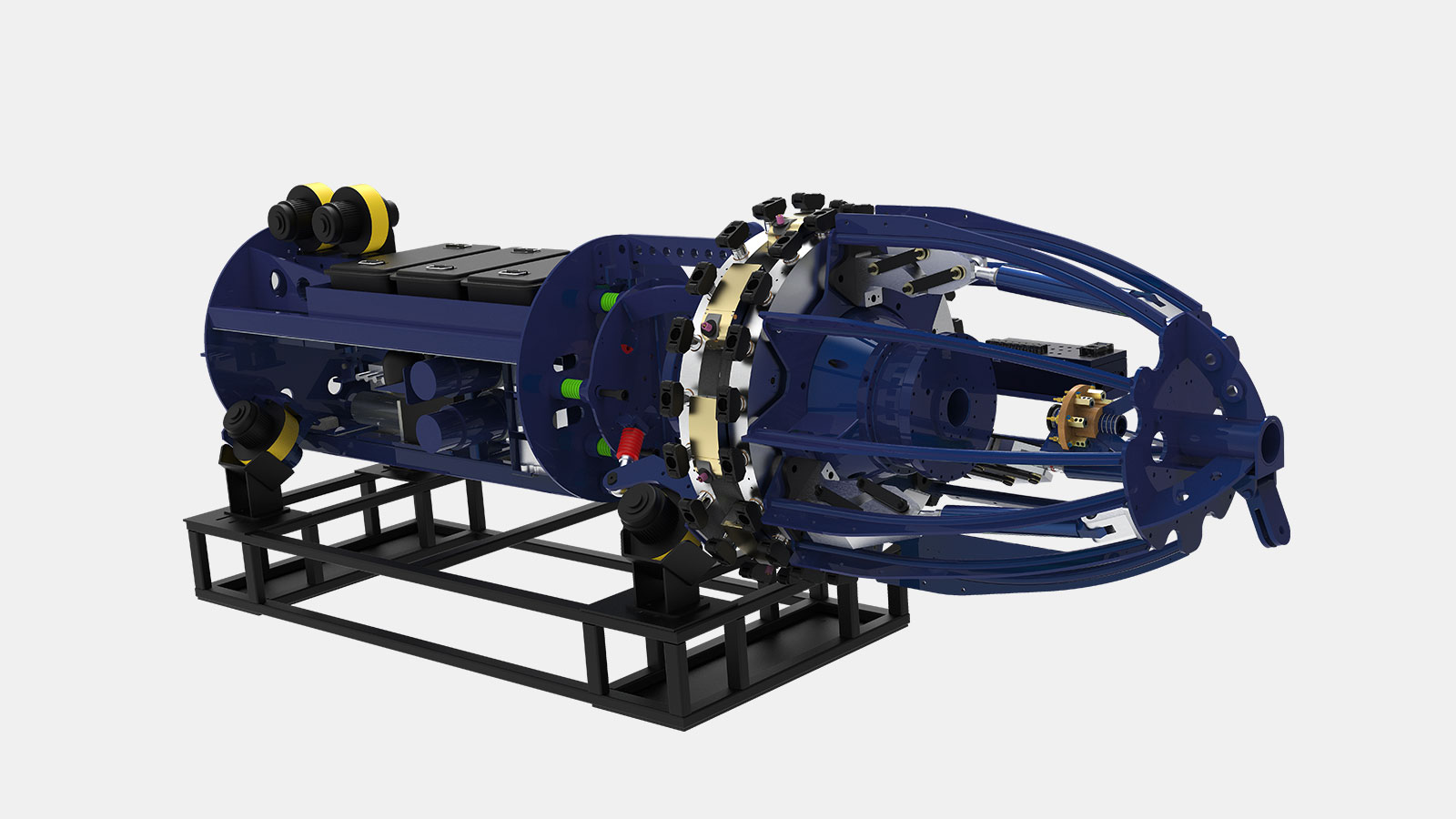
Internal Welding Machine (DW-EH48/56 and DW48/56-8H-D)
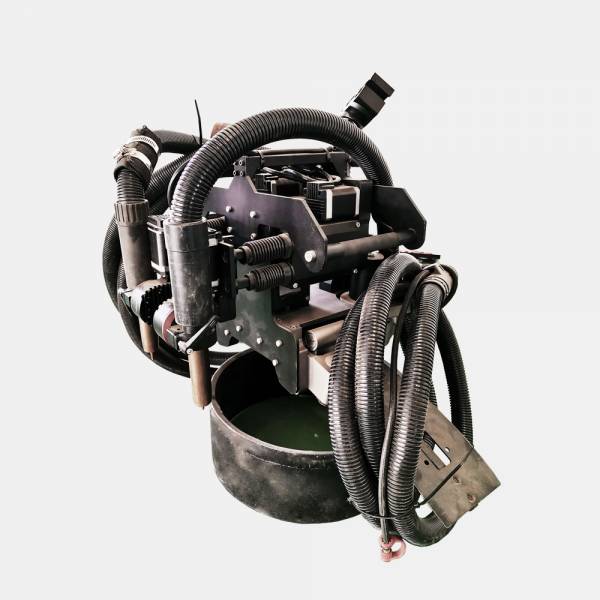
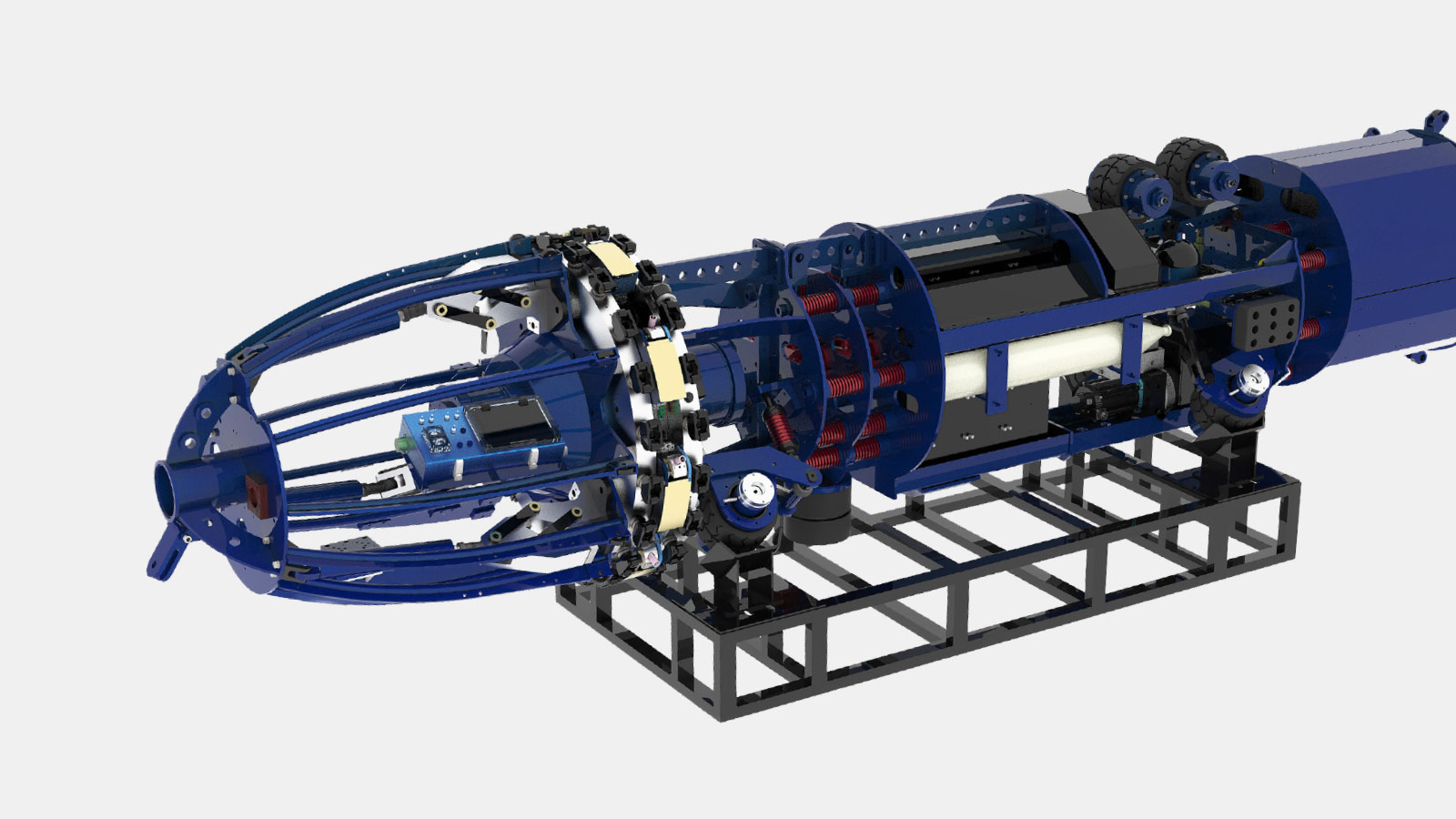
The internal machine attacks the two most expensive steps at once: fit-up and the root pass. Eight welding heads work from inside the pipe and hydraulic expansion centering corrects misalignment before the arc starts, so the external crew receives a joint that is already centred and root-welded. Two models cover different terrain and power situations.
| Parameter | DW-EH48/56 (lithium-battery internal welder) | DW48/56-8H-D (flexible internal welder) |
|---|---|---|
| Power / drive | Electric + hydraulic, lithium battery supply | High-torque servo electric drive, battery pack |
| Applicable pipe diameter | Φ1219 – Φ1422 mm | Φ1219 – Φ1422 mm |
| Welding heads | 8 | 8 |
| Travel speed | 0 – 40 m/min | 0 – 60 m/min |
| Welding time | ≤ 90 s per pass | ≤ 120 s per pass |
| Line-up plus root | Root handled by the 8 internal heads | Line-up and root in about 5 minutes |
| Gradeability | ≤ 30° | ≤ 30° |
| Bend passage | 5D horizontal 90°, 30° vertical | 5/6 D curvature |
| Rated pressure | 5 – 7 MPa | 5 – 7 MPa |
| Altitude and temperature | ≤ 4000 m; −40 to 65 °C | 0 – 3500 m; −50 to 65 °C |
| Weight / machine size | 2950 kg; 5200 × 1200 × 1100 mm | 2400 kg; 4600 × 1250 × 1200 mm |
The productivity difference is not only the pass time; it is the removal of the line-up step from the external crew’s workload plus the travel speed that lets the machine reposition quickly between joints. The lithium model’s cable-free battery supply removes the need to bring power to the ditch, which matters on spreads with no grid access. The flexible model’s compact body and 0–60 m/min travel make it the better fit where bends, grades and tight passes dominate the route.
Automatic TIG Welding Machine
Automatic TIG is the slowest process per pass and the fastest way to stop paying for root repairs. Programmed arc energy, stable travel and a clean, spatter-free bead make it the process of choice for root passes on stainless, alloy and thin-wall lines, where acceptance is decided by penetration and cleanliness rather than deposition rate. In productivity terms, treat it as a risk-reduction investment: it rarely shortens the cycle directly, but it removes the cut-out, the re-weld and the second inspection that a poor root imposes on the entire spread.
From Cycle Time to Joints per Day
Once each step has been measured, daily output is arithmetic rather than opinion.
- Effective minutes = shift minutes × utilisation, where utilisation already accounts for moving the station, rotation, breaks and delays.
- Cycle time per joint = line-up + root + fill + cap, in minutes.
- Joints per day = effective minutes ÷ cycle time per joint ÷ (1 + expected repair rate).
- Joints accepted is the only figure that should enter a bid; joints started is an internal metric.
Worked example. A ten-hour shift with eight effective hours gives 480 gross minutes; at 75 % utilisation that is 360 productive minutes. If the internal machine covers line-up and root in about five minutes and filling plus capping takes twenty-four minutes with the external machine, the cycle is roughly 29 minutes per joint, or about twelve joints per shift at zero repair rate. Now reduce the repair rate from 8 % to 3 % through repeatable parameters and centering: the same crew delivers about 12.4 joints instead of 11.1. One extra accepted joint, every shift, at no additional labour cost. That single joint is produced by the internal machine and the tracked external machines working as one station, not by a faster torch.
Where the Money Actually Goes: Cost per Joint
Cost per joint is a sum of five components, and only one of them is the equipment itself.
| Cost component | What drives it | How automatic equipment reduces it |
|---|---|---|
| Equipment cost per joint | Day rate or amortisation ÷ joints per day | A higher accepted joint count spreads the same capital over more joints |
| Direct labour | Crew hours per joint | The internal machine removes the line-up crew from the external station |
| Consumables | Wire, shielding gas, torch parts | Dual-torch pass reduction lowers wire and gas per joint; universal consumables cut parts inventory |
| Repair and rework | Rejection rate × cut-out, re-weld and re-inspection | Repeatable parameters and hydraulic centering attack the root cause rather than the symptom |
| Schedule and delay cost | Days on the spread, standby equipment, liquidated damages | Shortening the critical path is the largest saving that automatic welding offers |
Configuration Matrix: Matching the Machine to the Job
| Project situation | Recommended configuration | Why |
|---|---|---|
| Long-distance, high-grade pipeline with a tight schedule | Internal machine for the root plus dual-torch external welders for fill and cap | Both the highest-risk step and the heaviest pass count come off the critical path |
| General pipeline construction and pre-fabrication, moderate joint count | Single-torch external welder, internal machine where diameter permits | Lowest set-up and changeover time per joint and the simplest site logistics |
| Mountain, hilly and urban utility corridors with bends | Flexible internal welder DW48/56-8H-D plus single-torch external welder | Compact body, 0–60 m/min travel and 5/6 D bend passage keep the station moving |
| Remote spread with no grid access | Lithium-battery internal welder DW-EH48/56 plus diesel engine-driven welding power | Cable-free internal welding removes the power feed to the ditch |
| Stainless, alloy or thin-wall root with strict cleanliness criteria | Automatic TIG for the root, external welder for fill and cap | Clean, spatter-free root without sacrificing fill-pass productivity |
| High-specification pre-fabrication yard | Dual-torch external welders on fixed stations | Highest deposition per pass in a controlled environment |
Six Planning Mistakes That Inflate Cost per Joint
- Planning on datasheet travel speed instead of cycle time measured at the station.
- Buying the fastest torch while leaving line-up manual — the critical path does not move.
- Leaving the repair rate out of the output calculation, when one cut-out can cost more than a shift of extra passes.
- Treating the internal machine and the external machine as separate purchases rather than one station with a shared track system.
- Not programming per-diameter and per-wall-thickness recipes in advance, so every changeover becomes a trial weld.
- Reporting joints started instead of joints accepted at non-destructive testing.
Conclusion
Cost per joint is decided by the critical path, not by the fastest single operation. Put the internal welding machine on line-up and root to remove the two highest-risk steps; use tracked single- or dual-torch external welders for fill and cap where pass count matters; and reserve automatic TIG for roots that will be judged by cleanliness rather than deposition rate. Beijing Engine Welder Technology Co., Ltd. (DENOH Group) supplies the complete ENGINE WELDER / DENVO pipeline automatic welding range and supports configuration planning, parameter programming and on-site commissioning.
Contact: Beijing Engine Welder Technology Co., Ltd. (DENOH Group) | Tel: 010-86468776 | Email: sales@denohgroup.com | WhatsApp/WeChat: 13521628344