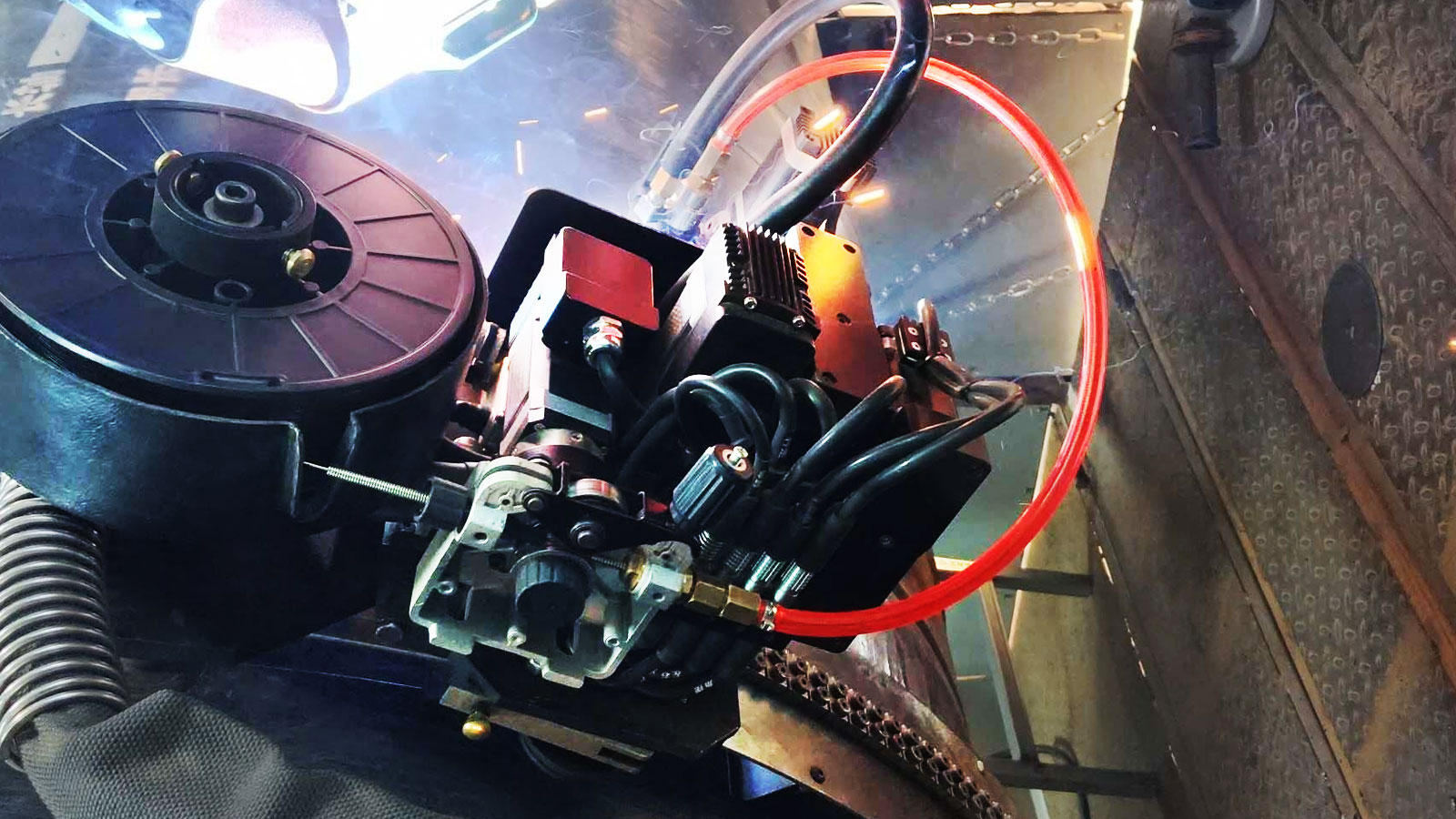
Ask any pipeline contractor what they bought when they moved from stick and semi-automatic welding to automatic welding, and the answer is usually a productivity story: more joints per shift, fewer repairs, one operator instead of three. The second, quieter return on the same investment is a safety one — and on large-diameter work in trenches, on slopes and inside pipe it is often the larger of the two. An automatic system does not simply weld better than a man. It lets the man stand somewhere else while the joint is welded: behind a remote control, outside the trench, upwind of the plume and clear of the moving carriage.
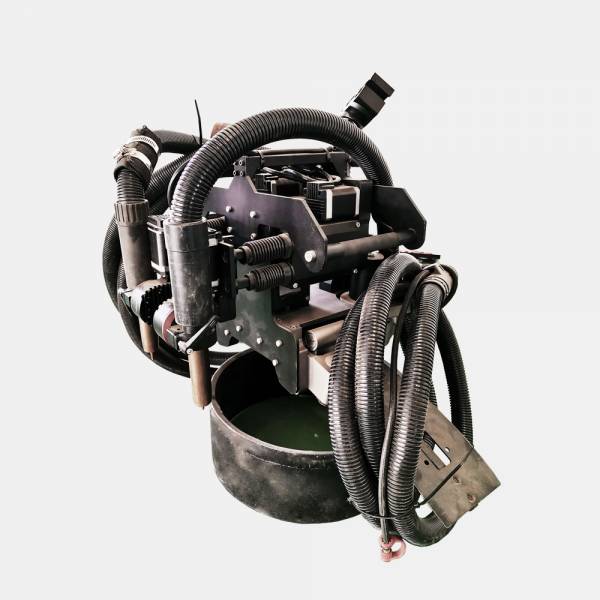
That is not a slogan, it is a design property, and it is visible in the hardware. The four machines in the ENGINE WELDER / DENVO pipeline automatic welding range — the single-torch external welder, the dual-torch external welder, the lithium and flexible internal welders, and automatic TIG root welding — each carry safety-relevant features that are listed in their own specifications rather than added on afterwards. This guide maps the hazards of a pipeline spread onto those features, and sets out what still has to be managed by procedure, training and personal protective equipment.
The Real Safety Case: Exposure Hours, Not Incident Statistics
Welding risk is, to a first approximation, dose. Arc radiation, fume inhalation, awkward posture and radiant heat all scale with the hours a welder spends inside the arc, and with the number of times a day he gets down onto the pipe and up again. Moving to automatic welding changes that dose in four measurable ways:
- Arc-on exposure collapses. The operator loads the programme and supervises rather than holding the torch. During the pass his eyes and skin are behind a screen or outside the immediate arc envelope.
- Fume exposure moves away from the breathing zone. The operator is standing a few metres away and, critically, upwind, instead of having his face in the plume.
- Posture load is transferred to the machine. Kneeling, twisted and crouched positions over a joint are replaced by standing at a panel, adjusting a track or monitoring a remote display.
- Manual handling of the arc stops. There is no welder holding a torch in a trench for a full shift, no torch lead dragged over a bevel, and no hot stub to drop.
None of this removes the hazard. It relocates it. The arc still burns, the fume still forms, the machine now weighs 2.4 tonnes and the hydraulics run at 50 to 70 bar. The point is that the controls move up the hierarchy from PPE towards engineered and remote protection — which is where controls actually work.
Mapping the Hazards of a Pipeline Welding Spread
A pipeline spread is not a workshop. The ground is uneven, the weather is whatever the project timetable allows, the pipe is hot on one end and cold on the other, and the work front moves every day. The table below is the hazard inventory that a job safety analysis for an automatic welding spread should cover.
| Hazard | Where it appears | Main control | Residual risk to manage |
|---|---|---|---|
| Arc radiation (UV / IR / visible) | Any open arc; adjacent joints and helpers | Remote operation, welding screens and curtains, auto-darkening filters to ISO 16321 / EN 379 | Bystander flash; reflective surfaces; second man at the joint |
| Welding fume and gases | Above every arc; inside pipe and in trenches where it accumulates | Local exhaust ventilation to ISO 21904, position control, respiratory protection | Confined and semi-confined locations; maintenance welding with poor extraction |
| Oxygen deficiency / asphyxiation | Inside pipe; trenches; shielding gas pocketing | Gas detection before and during entry, forced ventilation, cylinder discipline | Argon and CO2 are heavier than air and collect in low spaces |
| Stored hydraulic energy | Internal welder expansion shoes, 5–7 MPa working pressure | Pressure relief before breaking any connection, rated hoses, no work on pressurised lines | Fluid injection injuries; hose chafing over the bevel |
| Mechanical / moving parts | Travelling carriage on the ring track; rotating internal head | Guarding, exclusion zone, remote control, electromagnetic braking | Hands near the track during travel; track slipping on an out-of-round pipe |
| Electrical | Welding power source, generator supply, DC 24 V internal machines | RCD protection, correct earthing, SELV for internal machines, dry cable routes | Wet ground, damaged leads, welding return path through structures |
| Manual handling and lifting | 2400–2950 kg internal machines; track sections; gas cylinders | Certified lifting points, mechanical lifting only, trained banksman | Slopes up to 30°; soft ground; loading and unloading |
| Hot surfaces and fire | Hot pipe ends, spatter, grinding sparks, solvent and coating residue | Hot work permit, fire watch, extinguishers, gas testing before entry | Coating and lining fires; smouldering rags in the pipe |
| Noise | Arc, engine-driven power sources, grinders, plant | Hearing protection zones, low-noise plant selection | Communication breakdown at the work front |
| Explosive atmosphere | Tie-ins at live facilities; areas with hydrocarbon vapour | Gas testing, permit-to-work, intrinsically safe instruments, no hot work without clearance | Wind-borne vapour; vent and drain points |
Engineering Controls Already Built Into the Machines
The most reliable safety control is the one that does not depend on a man remembering it at the end of a twelve-hour shift. The published specifications of the four machine types include several features that work in exactly that way, and it is worth being explicit about which hazard each one addresses.
| Documented machine feature | Machines | Engineering control it provides | Hazard reduced |
|---|---|---|---|
| Wireless remote control | Battery internal (DW-EH48/56), flexible internal (DW48/56-8H-D) | Operator works at a distance from the arc and from the rotating head instead of at the joint | Arc radiation, fume in breathing zone, mechanical contact |
| Fast-response electromagnetic brake | Flexible internal | Positive braking and reliable positioning of the travelling head | Run-on and unexpected travel; hand trapping on the track |
| Hydraulic expansion and centring, 5–7 MPa | Both internal machines | Corrects pipe offset and centres the machine before welding | Hi-lo related root defects and the cut-outs that follow them |
| DC 24 V nominal working voltage | Both internal machines | Internal welding machine runs on safety extra-low voltage rather than mains potential | Electric shock risk inside pipe and in wet conditions |
| Lithium battery pack, 230 AH × 3 | Flexible internal | Removes the trailing mains cable from the trench and the pipe interior | Cable damage, tripping, water ingress on live cable |
| Toothed steel ring track, split construction | Single-torch and dual-torch external | Rigid guided travel; light carriage with good dust resistance | Track slip and loss of the controlled arc position |
| Single rack-and-pinion drive, no slip | Single-torch external | Positive, repeatable travel without lost steps | Inconsistent travel speed and unpredictable arc position |
| Arc auto-tracking and integrated digital control | Dual-torch external | Automatic seam tracking and correction keeps the arc where it was programmed | Operator reaching in to adjust mid-pass |
| Touch-screen HMI with parameter upload / download | Single- and dual-torch external | Parameters stored and transferred rather than set by hand at the joint | Human error; unnecessary presence at the arc |
| Consumable commonality across torches | Dual-torch external | Fewer part numbers and less time spent in the trench changing consumables | Exposure hours; hot and sharp component handling |
Read the table as a safety argument for automation, not just a feature list. Remote control does not make the arc safer; it makes standing next to the arc unnecessary. Safety extra-low voltage does not make current harmless; it removes the possibility of a mains-potential fault inside a confined pipe. The controls that remain are procedural, and they are the subject of the rest of this guide.
Confined Space and In-Pipe Work with the Internal Welding Machines
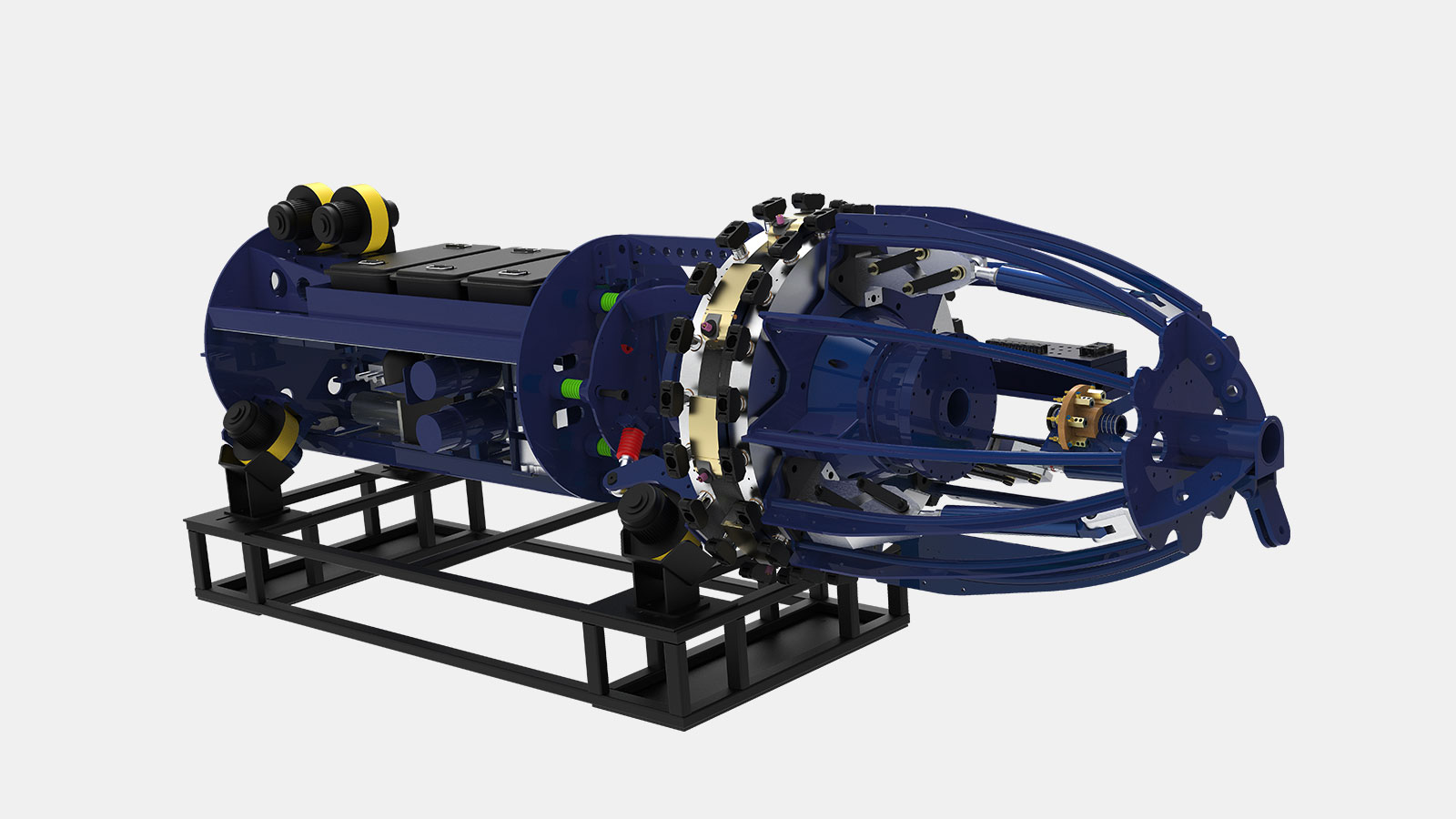
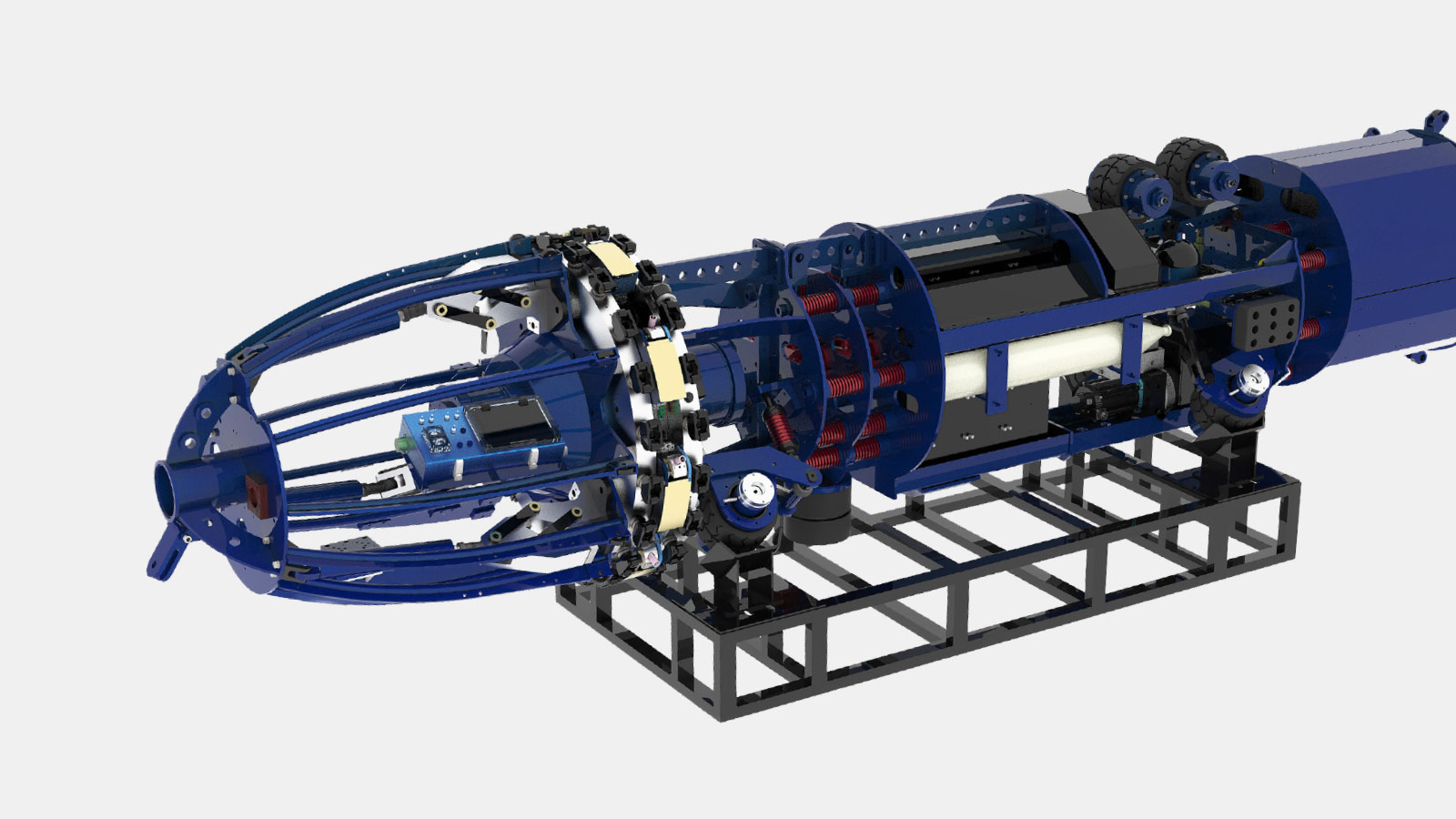
Internal welding machines are designed to travel the pipe bore, and that is exactly why they are the safest way to make an internal root pass: the machine goes in, not the man. Any work that still requires a person inside the pipe — inspection, manual intervention, back purge checks — is confined space entry and must be treated as such, with a permit, an attendant at the entry point and continuous atmospheric monitoring.
Typical permit thresholds before entry, to be confirmed against the project standard and local regulations such as GB 9448 in China or the equivalent site rule:
- Oxygen between 19.5% and 23.5% by volume — both deficiency and enrichment are hazards inside a pipe.
- Flammable gas below 10% of the lower explosive limit; many hydrocarbon projects set a stricter figure.
- Hydrogen sulphide below the occupational exposure limit, commonly taken as 10 ppm in sour service.
- Carbon monoxide below the short-term limit, typically taken as 25 ppm.
- Forced ventilation established before entry and maintained throughout, with a gas monitor worn by the entrant and a second monitor at the entry point.
Battery Packs, Charging and Fire Risk
The lithium internal machine carries a 230 AH × 3 battery pack, and the flexible machine uses battery drive with servo motors. Battery chemistry does not remove the need for discipline; it moves the risk to the charging area and the handling of the pack. Charge away from the bevel, on a stable surface, clear of the pipe interior and of anything combustible; keep a suitable extinguisher and a dry sand container within reach; never charge a pack that has been immersed or mechanically damaged; and never leave a pack charging overnight in a confined or unmanned location. Inside the pipe, the DC 24 V working voltage removes the mains shock path, but the pack is still a store of energy and must be treated as one.
Hydraulics Under Pressure
Both internal machines expand hydraulically to centre themselves, with a rated working pressure of 5–7 MPa — roughly 50 to 70 bar. High-pressure fluid can penetrate skin without a visible cut, and the resulting injury is a medical emergency, not a first-aid case. Before any work on a hydraulic line, isolate and relieve the pressure. Inspect hoses for chafing where they pass over bevels and track edges. Never search for a leak with a bare hand; use a piece of cardboard. Tag any suspicion of a weeping fitting and take the machine out of service rather than tightening it hot.
Fume, Gases and Ventilation
Automatic welding does not generate less fume per arc hour than manual welding; if anything it can generate more, because the arc burns continuously and the deposition rate is higher. What changes is where the operator stands. That is a real improvement, but it does not remove the need for extraction: the plume is still generated, it still drifts with the wind, and in a trench or inside a pipe it has nowhere to go.
| Contaminant | Where it comes from | Why it matters | Control |
|---|---|---|---|
| Welding fume particulate | Consumable, base metal and coating at the arc | Ultrafine particles in the respirable range deposit deep in the lung; classified as a carcinogen in many jurisdictions | Local exhaust ventilation to ISO 21904, positioned so that capture velocity at the hood face is of the order of 0.5 m/s; respiratory protection as a second line |
| Ozone (O3) | UV acting on oxygen, especially on aluminium and stainless | Short-term respiratory irritation and delayed pulmonary effects | Extraction plus position control; never rely on a paper mask |
| Nitrogen oxides (NOx) | High-current arcs in air | Respiratory irritation; worse in confined locations | Ventilation and extraction close to the arc |
| Carbon monoxide (CO) | Shielding gas decomposition and combustion products | Binds haemoglobin and reduces oxygen transport | Gas monitoring in confined spaces; no engine exhaust near the work front |
| Shielding gas asphyxiation | Argon and CO2 displacing air in low spaces | Oxygen deficiency without any warning smell or irritation | Ventilation, entry procedures, cylinder discipline |
| Hexavalent chromium and nickel | Stainless and high-alloy consumables | Specific occupational health concern requiring tighter control | Segregated extraction, health surveillance, hygiene facilities |
Shielding gas is stored in a 30 litre cylinder on the lithium internal machine and in cylinders on the spread generally. Store them upright, secured and outside the hot work area, with the cap fitted when not in use, and never lift a cylinder by its valve or leave it inside a pipe or a trench overnight. Gas pockets do not announce themselves, and the atmosphere they create is the single most under-estimated hazard in a pipeline welding spread.
Electrical Safety: SELV, Generators and Earthing
The internal welders run on DC 24 V nominal working voltage, which is safety extra-low voltage and the reason a machine can operate inside a steel pipe without a mains supply at the working point. The external welders and the automatic TIG set sit on the other side of that line: they are powered from the site distribution or from a diesel generating set such as the HW series, and they carry full mains and open circuit voltage. Both regimes need respect, in different ways.
- Earth leakage protection. Every welding power source on the spread should be fed through an RCD appropriate to the supply, and the device should be tested before it is put into service.
- Earthing and the welding return. The work return clamp belongs on the pipe, close to the joint, on clean metal. Never use the pipe, a structure or a rail as a general earthing path for anything else; stray welding current has caused serious damage to bearings, instrumentation and cathodic protection systems.
- Leads and connectors. Route welding leads and power cables overhead or protected, never across a walkway or through standing water. Inspect for damage at every splice and connector each shift; replace, do not tape, a damaged lead.
- Wet and low-temperature conditions. The internal machines are rated for ambient from −40 °C to +65 °C (lithium) and −50 °C to +65 °C (flexible), but the human beings are not insulated to the same standard. Gloves, dry foot protection and a dry standing area matter more in the cold, not less.
- Electromagnetic fields. Welding equipment generates magnetic fields; keep the welding and return leads close together and route them away from the operator, and manage pacemaker wearers in line with the equipment assessment carried out under IEC 62822 or the local equivalent.
Inside the pipe, DC 24 V is not an invitation to work in water. Clean and dry the pipe bore, drain any water, and stop work if the internal camera or the bevel area is flooded.
Ergonomics: From Kneeling on the Pipe to Standing at the Panel
The ergonomic argument for automatic welding is habitually listed third or fourth, behind productivity and quality. It should not be. Musculoskeletal injury is one of the most common causes of lost time in welding and pipeline construction, and it is a cumulative injury that ends careers rather than shifts. Automatic welding does not eliminate the physical work — somebody still sets the track, fits the clamp and carries the gas — but it removes the sustained static posture that causes most of the damage.
| Task | Manual / semi-automatic baseline | Automatic welding | Ergonomic effect |
|---|---|---|---|
| Root pass | Welder braced over the joint, head inside pipe or on a slope, backloaded and twisted | Internal machine travels the bore; the operator watches a remote display | Removes the worst static posture of the day |
| Fill and cap passes | Torch held by hand, cable dragged around the circumference, hour after hour | Carriage travels the ring track under stored parameters | Removes sustained grip force, vibration and cable handling |
| Position changes | Numerous climbs into and out of the trench per joint | Fewer position changes per joint | Reduces acute strain and slip/trip exposure |
| Heat exposure | Radiant heat on face, arms and chest through the shield | Operator stands outside the arc envelope; hot work still on the pipe | Reduced radiant and total heat load |
| PPE burden | Full welding PPE including hood for the whole shift | Full PPE still required, but worn for shorter periods at the arc | Lower cumulative heat strain and fatigue |
| Vibration / HAVS | Hand-arm vibration from grinding and manual welding | Reduced hand-arm vibration hours | Directly reduces a reportable occupational disease |
Cold-weather work deserves its own line in the job safety analysis. A machine rated to −40 °C or −50 °C will start and weld; a crew that has been standing on steel at −30 °C for six hours will not perform at the same level. Insulated standing mats, warm rest areas, rotated crews and monitored work-rest cycles are the controls that keep a winter spread productive and intact.
Lifting, Rigging and Moving a Two-and-a-Half-Tonne Machine
The internal machines are 2400 kg (flexible, DW48/56-8H-D, 4600×1250×1200 mm) and 2950 kg (lithium, DW-EH48/56, 5200×1200×1100 mm). Both can climb slopes up to 30° and pass bends of 5D to 6D, which means they will be moved onto ground that a forklift cannot reach. Lifting and moving them is a planned operation, not an improvisation.
- Lift only from the certified lifting points, with slings rated for the load and a trained banksman in charge.
- Never lift or tow the machine by a cable, hose, remote-control tether or the ring track.
- Before entering the pipe, verify support: pipe rollers, sandbags and side booms must hold the weight without rolling, and the slope must be within the machine rating.
- Secure the machine against rolling on any slope above a shallow grade, including when it is left standing overnight inside or beside the pipe.
- Keep hands clear of the ring track and the clamp during set-up; the machine’s own brake is a control, not a substitute for exclusion.
- Treat loading and unloading at the stockyard as a separate lifting plan from the right-of-way; most handling incidents happen where the crew is least attentive.
A Practical HSE Checklist for an Automatic Welding Spread
- Job safety analysis completed and signed for the day’s work front, covering trench, slope and tie-in locations.
- Hot work permit, and where applicable confined space entry permit, in force before the first arc.
- Atmospheric test recorded at the entry point and at the working position; gas monitors on the entrant and the attendant.
- Forced ventilation running and verified in the trench and inside the pipe.
- Fume extraction positioned relative to the arc and to the wind, with respiratory protection available.
- Welding screens and curtains placed so that no bystander can see an open arc.
- RCD tested, leads inspected, welding return clamped to the pipe on clean metal close to the joint.
- Hydraulic hoses inspected; pressure relieved before any connection is opened.
- Battery charging area established away from the pipe, with extinguisher and sand.
- Fire extinguisher, fire watch and a means of raising the alarm at every work front.
- Exclusion zone defined around the travelling carriage and the internal head.
- Communication checked — radio or hand signals understood by the operator, the banksman and the helper.
- Everyone on the spread knows they have stop-work authority and no penalty for using it.
Seven Safety Misconceptions About Automatic Welding
- Automatic means safe. The arc does not stop being an arc. What changes is who is standing near it.
- Remote control means no PPE. The operator still enters the fume zone, still handles hot pipe and still needs eye, skin and hearing protection for adjacent work.
- The machine cannot hurt me because it is only 24 volts. The battery pack stores energy, the hydraulics run at 50 to 70 bar, and 2.4 tonnes does not care how it is powered.
- Fume extraction is only needed for manual welding. Continuous automatic arcs can produce more fume per hour, not less, and they produce it in the same trench.
- Inside the pipe is safer than the trench. It is a confined space with a shielding gas risk, an egress problem and no natural ventilation. It is a permit job.
- Safety slows the spread down. Fit-up control, extraction and a tested RCD prevent cut-outs and shutdowns, which are the only things that really stop a spread.
- The procedure is the safety system. Procedure governs the weld; engineering controls, competences and supervision govern whether anyone is hurt making it.
The machines in the ENGINE WELDER / DENVO pipeline automatic welding range are specified with safety-relevant engineering — wireless remote control, electromagnetic braking, DC 24 V working voltage, hydraulic centring and automatic tracking — because that is what an automatic spread actually needs. The remaining controls are procedural, and they belong to the contractor who owns the permit. Get both halves right and automatic welding is not merely faster than manual welding; it is a fundamentally better place to spend a career.
Beijing Engine Welder Technology Co., Ltd. (DENOH Group)
Tel: 010-86468776
WhatsApp / WeChat: 13521628344
Email: sales@denohgroup.com
Web: www.denohgroup.com/contact/